I’m a huge believer in getting nutrients from whole food. But there’s one exception I’m always very clear about with every plant-based client: vitamin B12.
This isn’t a weakness of plant-based eating. It’s simply a quirk of how B12 is made, and a reminder that modern life is very clean.
What does B12 do?
- Keeps your nerves healthy, by helping make the protective coating around them
- Helps make healthy red blood cells
- Supports energy, mood and memory
- Works with folate in methylation, a key process for DNA, detox and hormone balance (read Methylation and you)
- Keeps homocysteine low, which matters for heart and brain health
Where does B12 come from?
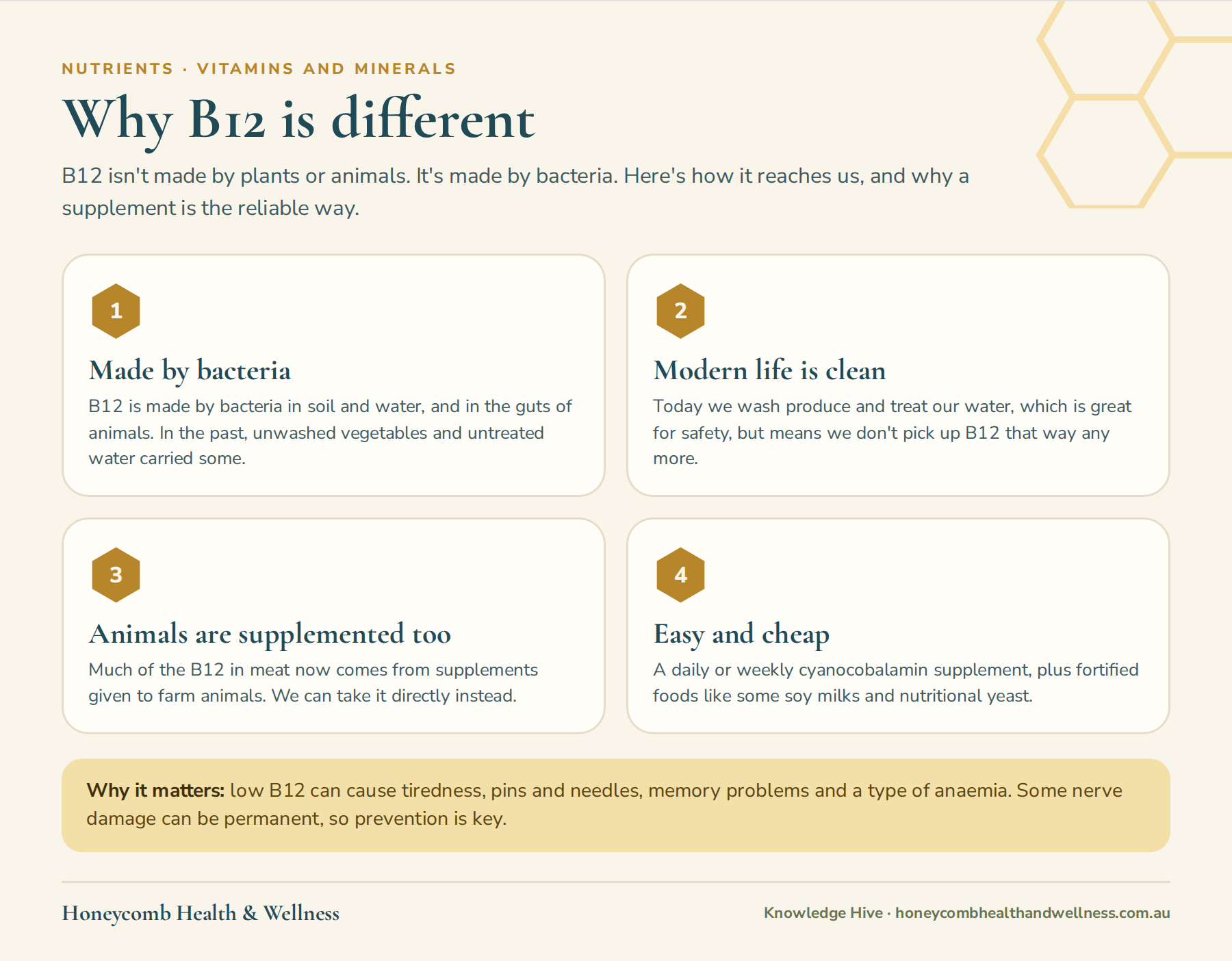
It’s a bit like rainwater in a tank. The rain (the bacteria) is the true source. Animals collect B12 in their “tanks” from bacteria in their environment and gut, or from supplements added to their feed. When we eat animals, we’re drinking from their tank. Taking a supplement is like going straight to the source. It’s not exactly like this scientifically, but it’s an easy way to understand it.
Who’s at risk of low B12?
- Anyone eating a fully or mostly plant-based diet without a supplement
- People over 50, because stomach acid (which helps release B12 from food) declines with age
- People taking metformin or long-term reflux medications
- People with coeliac disease, Crohn’s disease or a history of gut surgery
- Pregnant and breastfeeding women eating plant-based, because babies’ B12 depends on yours
Low B12 is common among vegetarians and vegans who don’t supplement, especially those who have been plant-based for a long time (Pawlak et al., 2013). Your liver can store B12 for a few years, so symptoms can take a long time to appear.
Signs of low B12
- Tiredness and weakness
- Pins and needles or numbness in hands and feet
- Poor memory, low mood or brain fog
- A sore, red tongue or mouth ulcers
- Pale skin or breathlessness
How much do you need?
The recommended daily intake for adults in Australia is 2.4 micrograms. Because absorption from supplements is limited, the amounts in supplements are much higher. Common approaches for adults include:
- A daily supplement of about 25 to 100 micrograms of cyanocobalamin, or
- A weekly supplement of about 2,000 micrograms, or
- Fortified foods eaten two or three times a day, if they provide enough (check the labels).
Cyanocobalamin is the most studied, stable and affordable form (Rizzo et al., 2016). Chewable or under-the-tongue tablets are fine. Your needs may be different, especially if you’re already low, so it’s worth getting individual advice.
Testing
A standard serum B12 test is a good start, but it doesn’t always tell the full story. Active B12 (holotranscobalamin) and homocysteine give a clearer picture. In clinic, I interpret these as part of your blood and functional testing, and adjust your dose to suit you.
Food sources to include
- B12-fortified soy or oat milk (check the label)
- Fortified nutritional yeast flakes
- Some fortified breakfast cereals and meat alternatives
Recipes with fortified foods
- Cheezy Creamy Pasta with nutritional yeast
- Hemp Caesar Dressing
- Iced Coffee Breakfast Smoothie with fortified soy milk
One small tablet protects your nerves, blood and brain for life. It’s the easiest health habit there is.
A note on medication: please don’t stop or change any prescribed medication on your own. When you change the way you eat, your numbers can move quickly, so keep your prescribing doctor informed so your doses can be reviewed as you improve.
References
- Pawlak R et al. How prevalent is vitamin B12 deficiency among vegetarians? Nutrition Reviews. 2013;71(2):110-117.
- Rizzo G et al. Vitamin B12 among vegetarians: status, assessment and supplementation. Nutrients. 2016;8(12):767.
- National Health and Medical Research Council. Nutrient Reference Values for Australia and New Zealand: Vitamin B12.
How Honeycomb can help
You don’t have to work this out alone
This information is general education and is not a substitute for individual advice. Please speak with your health practitioner before making changes, especially if you take prescribed medication.
Keep going
You’re not doing this alone
This information is general education and is not a substitute for individual advice. Please speak with your health practitioner before making changes, especially if you take prescribed medication.