When people first cut back on salt, the most common thing I hear is: “But it tastes like nothing!” I understand. Salt is a powerful flavour, and most of us have been eating a lot of it for a very long time.
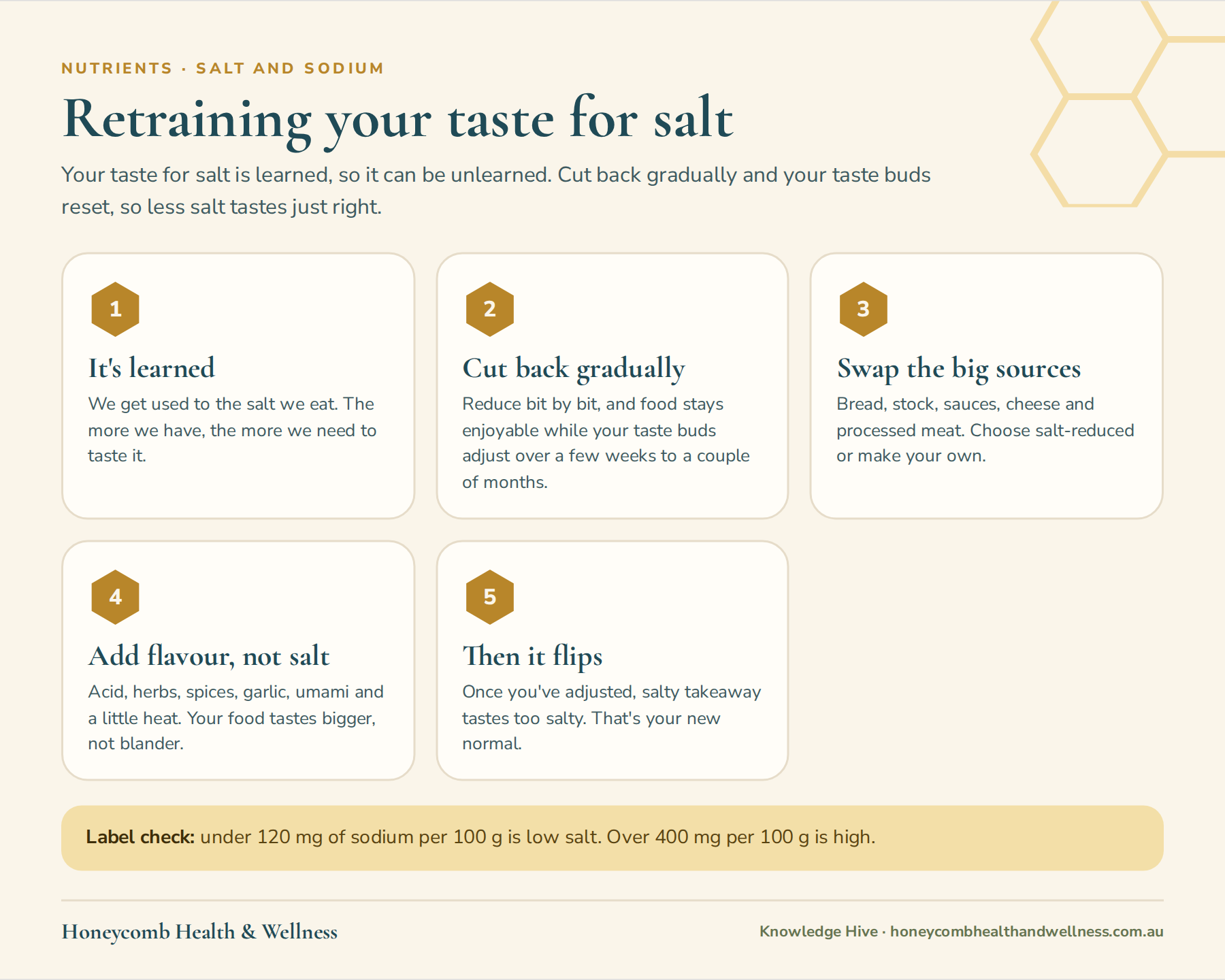
Here’s the encouraging part: your taste for salt is learned, so it can be unlearned.
Why it matters
Too much sodium makes your body hold on to water, which can show up as puffy ankles and fingers, and over time it raises your blood pressure. (Read Fluid retention: how fruit, potassium and less salt help and Blood pressure and salt.) The World Health Organization recommends less than 2,000 mg of sodium a day (5 g of salt, about a level teaspoon). Most Australians eat close to double that.
Your taste buds can reset
In a classic study, people who switched to a low-sodium diet found that, over the following weeks, their taste changed. By the second and third months, they preferred food with less salt, and salty food tasted too salty (Bertino et al., 1982).
It’s a bit like walking from bright sunshine into a dim room. At first you can’t see a thing, but give it a few minutes and your eyes adjust, and the room looks perfectly bright. Your taste buds do the same thing with salt, just more slowly. It’s not exactly like this scientifically, but it’s an easy way to understand it.
Where the salt really comes from
About three-quarters of the salt we eat is already in food before it reaches our plate. The salt shaker is only a small part of the story.
| Food | Sodium (approx.) |
|---|---|
| Soy sauce (1 tablespoon) | 900 to 1,000 mg |
| Stock cube (1, made up) | 800 to 1,200 mg |
| Bread (2 slices) | 250 to 400 mg |
| Cheese (2 slices) | 300 to 400 mg |
| Ham (2 slices) | 500 to 700 mg |
| Tinned soup (1 cup) | 700 to 900 mg |
| Takeaway pizza (2 slices) | 1,000 mg or more |
Step 1: swap the big sources
- Stock: choose salt-reduced or no-added-salt stock, or make a big pot of vegetable stock and freeze it.
- Soy sauce: use salt-reduced soy sauce or tamari, and halve the amount.
- Tinned food: buy no-added-salt beans, tomatoes and vegetables, and rinse tinned beans well.
- Bread: compare labels, as sodium varies a lot between brands. Or swap some bread for oats, potatoes and rice.
- Sauces and seasoning mixes: make your own with herbs and spices.
Step 2: cut back gradually
You don’t have to go cold turkey. Halve the salt in your cooking this week, and halve it again next month. Leave the salt shaker off the table, and taste before you add. Gradual changes are barely noticed, and your taste buds keep adjusting along the way.
Step 3: add flavour, not salt
- Acid: lemon, lime, vinegar (try balsamic, apple cider or rice vinegar). Acid makes food taste brighter, and it’s the closest thing to salt.
- Fresh herbs: coriander, basil, parsley, mint, dill and chives, added at the end.
- Spices: cumin, smoked paprika, turmeric, garam masala, curry powder, cinnamon and black pepper.
- Aromatics: garlic, onion, ginger, spring onion and lemongrass.
- Umami: mushrooms, tomato paste, nutritional yeast, roasted vegetables and a little miso (use sparingly, it’s salty).
- A little heat: fresh chilli or chilli flakes wake up your taste buds.
A word about salt substitutes
“Low-sodium” salts are usually made with potassium chloride. For many people they’re a helpful step. But if you have kidney disease, or take medications such as ACE inhibitors, ARBs, potassium-sparing diuretics or spironolactone, please check with your doctor or pharmacist first, because potassium can build up in your blood. And pink salt, sea salt and rock salt are still salt, with about the same sodium as table salt.
Eating out
- Ask for sauces and dressings on the side.
- Choose dishes built on vegetables, rice, potatoes or legumes.
- Balance a salty meal with fruit, potatoes and plenty of water over the next day.
Recipes that help
- Cumin Mango Dressing
- Nourish Your Body with Tomato Lentil Curry
- Coriander Lime Black Bean Nourish Bowl
- Creamy Garlic Mushroom and Lentils
All of the recipes in our Recipe Library are low in added salt, and the Six-Week Nutrition Reset inside the Honeycomb Community helps your taste buds reset week by week.
Give your taste buds a few weeks, and the salty food you used to love will start to taste too salty. That’s the moment you know you’ve changed.
A note on medication: please don’t stop or change any prescribed medication on your own. When you change the way you eat, your numbers can move quickly, so keep your prescribing doctor informed so your doses can be reviewed as you improve. This is especially important for blood pressure medications, because your numbers can fall when you cut back on salt.
References
- Bertino M, Beauchamp GK, Engelman K. Long-term reduction in dietary sodium alters the taste of salt. American Journal of Clinical Nutrition. 1982;36(6):1134-1144.
- World Health Organization. Guideline: Sodium intake for adults and children. Geneva: WHO; 2012.
- He FJ, MacGregor GA. A comprehensive review on salt and health and current experience of worldwide salt reduction programmes. Journal of Human Hypertension. 2009;23(6):363-384.
How Honeycomb can help
You don’t have to work this out alone
This information is general education and is not a substitute for individual advice. Please speak with your health practitioner before making changes, especially if you take prescribed medication.
Keep going
You’re not doing this alone
This information is general education and is not a substitute for individual advice. Please speak with your health practitioner before making changes, especially if you take prescribed medication.