You’ve read about cholesterol, blood pressure and why we leave out the oil. Now comes the most important question: “What do I actually eat?”
Knowing what’s good for us is rarely the problem. The problem is Tuesday night at 6 pm when everyone’s hungry and there’s nothing planned. So let’s make it simple, practical and delicious.
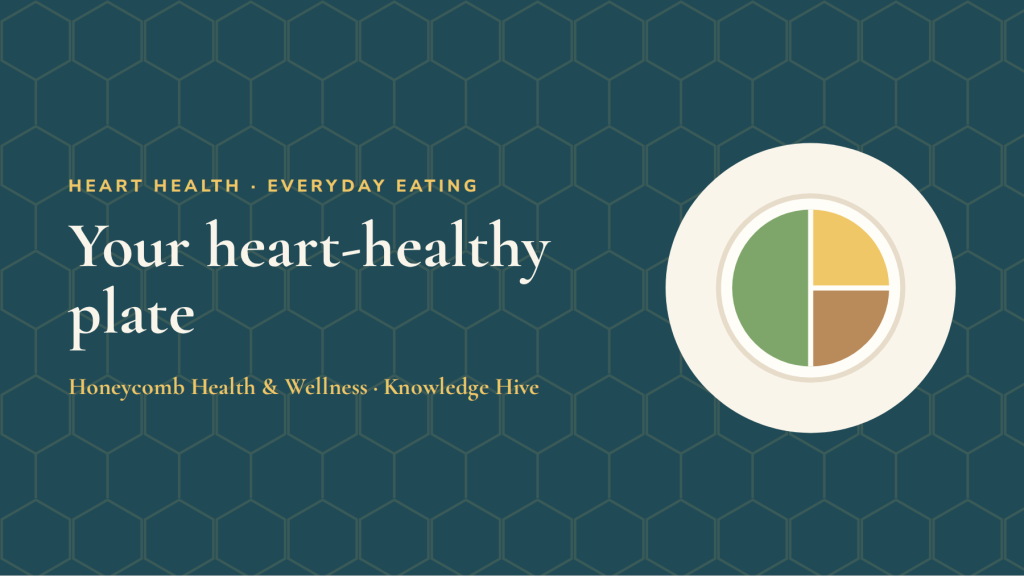
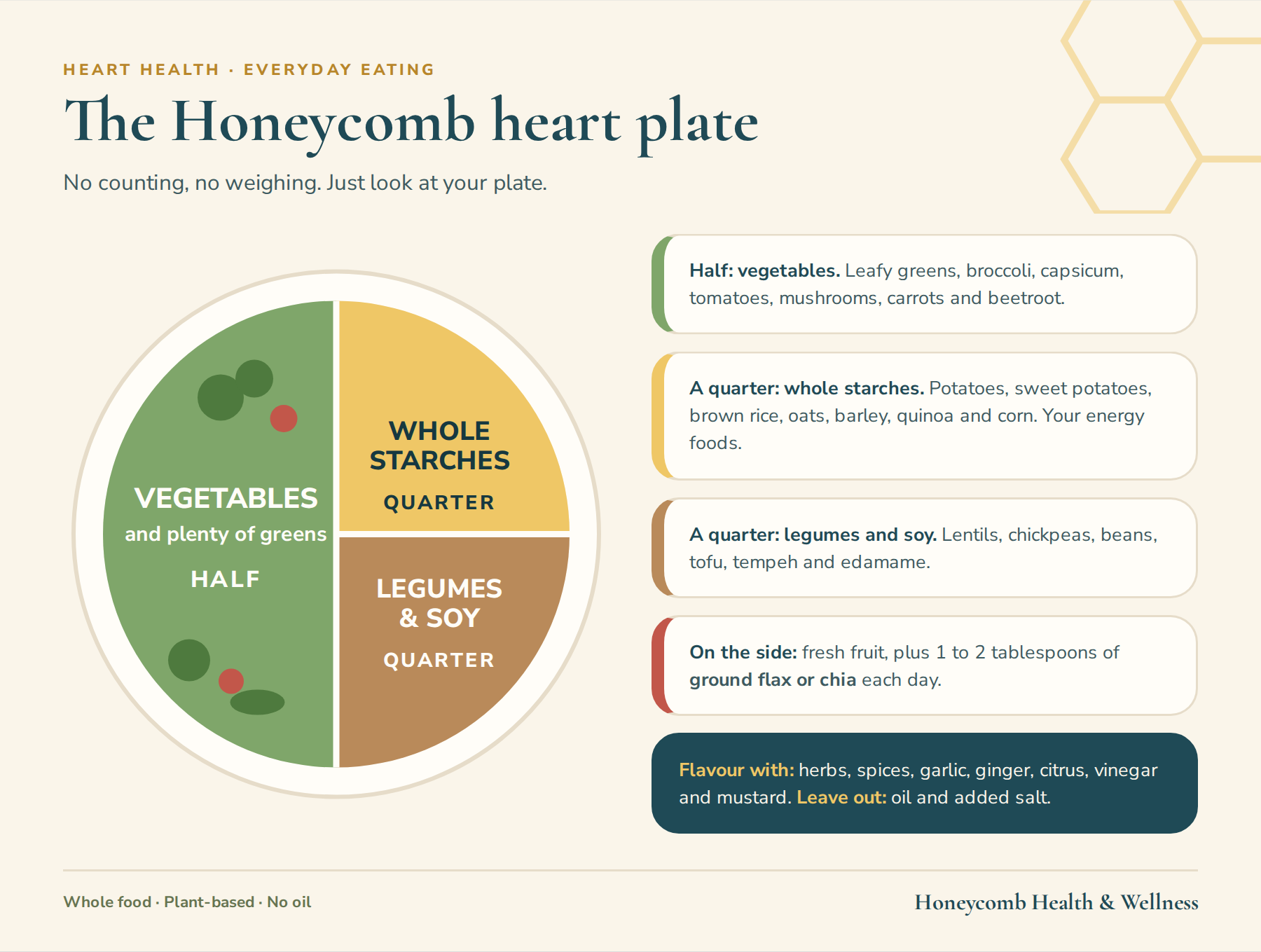
The Honeycomb heart plate
No counting, no weighing. Just look at your plate:
- Half: vegetables, and plenty of greens. Leafy greens, broccoli, capsicum, tomatoes, mushrooms, carrots, beetroot. Raw, steamed, roasted or in soups.
- A quarter: whole starches. Potatoes, sweet potatoes, brown rice, oats, barley, quinoa, corn and wholegrain pasta. These are your energy foods, and they keep you full. As Dr McDougall says, the healthiest populations in history have been starch eaters.
- A quarter: legumes and soy. Lentils, chickpeas, black beans, kidney beans, tofu, tempeh and edamame for protein, fibre and potassium.
- On the side: fruit, plus a sprinkle of ground flax or chia each day for omega-3s.
Flavour comes from herbs, spices, garlic, ginger, citrus, vinegar, mustard and oil-free sauces, not salt and oil.
Why this works for your heart
- No dietary cholesterol and very little saturated fat, so your liver can clear LDL.
- Lots of fibre (often 40 grams or more a day) to carry cholesterol out and feed a healthy gut.
- Rich in potassium and naturally low in sodium to help lower blood pressure.
- Full of antioxidants and nitrates to support a healthy artery lining.
- Filling but lower in kilojoules, so many people gently lose weight without going hungry.
A week of heart-healthy eating
This sample week follows our Elimination phase: no oil, and no nuts or avocado for now. Make extra at dinner and you have tomorrow’s lunch sorted.
| Day | Breakfast | Lunch | Dinner |
|---|---|---|---|
| Monday | Apple Pie Overnight Oats | Leftover chili on a baked potato | Slow Cooker Kidney Bean & Barley Chili |
| Tuesday | Cinnamon Overnight Oats | Big salad with chickpeas and Creamy Mustard & Thyme Dressing | Tomato Lentil Curry with brown rice |
| Wednesday | Chocolate Blueberry Chia & Flax Pudding | Leftover curry in a wholemeal wrap with greens | Lentil & Potato Soup |
| Thursday | Porridge with berries and ground flax | Leftover soup with wholegrain toast | Mushroom & Edamame Stir Fry with rice |
| Friday | Green Veggie Juice and oats | Coriander Lime Black Bean Nourish Bowl | Minestrone Soup |
| Saturday | Potato and tofu breakfast hash (water-sautéed) | Leftover minestrone | Creamy Garlic Mushroom & Lentils with mashed potato |
| Sunday | Wholemeal toast with mashed white beans and tomato | Eggplant & Greens Quinoa Soup | Potato, Leek & Kale Soup |
Snacks: fresh fruit, carrot and cucumber sticks with oil-free hummus, a baked potato, or a small bowl of leftover soup.
Your starter shopping list
- Pantry: rolled oats, brown rice, barley, quinoa, wholegrain pasta, canned or dried lentils, chickpeas, black beans and kidney beans (no added salt), canned tomatoes, low-salt vegetable stock, ground flaxseed, chia seeds
- Fridge: firm and silken tofu, tempeh, unsweetened soy milk, Dijon mustard
- Produce: potatoes, sweet potatoes, onions, garlic, ginger, leafy greens, broccoli, carrots, mushrooms, capsicum, beetroot, lemons, bananas, berries (fresh or frozen) and seasonal fruit
- Flavour: cumin, smoked paprika, turmeric, cinnamon, Italian herbs, nutritional yeast, apple cider vinegar, salt-reduced tamari
Making it stick
Habits grow best in good soil. Here’s what I’ve seen work, both in clinic and in my years of teaching children and families:
- Decide who you are. “I’m someone who looks after my heart” is far more powerful than “I’m not allowed fried food”. Your identity drives your choices.
- Bring the family in. Invite your partner or children to choose one recipe each week. People support what they help create.
- Batch cook on Sunday. A pot of soup, a tray of roast vegetables and a pot of grains make the week easy.
- Celebrate small wins. A lower blood pressure reading, more energy, a better bowel motion. Notice them and say them out loud.
- Expect a learning curve. Your taste buds and gut take two to four weeks to adjust. Extra fibre can mean a little extra wind at first; drink plenty of water and increase legumes gradually.
You don’t have to change everything today. You only have to choose your next meal well.
Ready for more support?
If you’d love this week planned for you, with a shopping list, weekly lessons and a community cheering you on, the Six-Week Nutrition Reset inside the Honeycomb Community walks you through it step by step. Not sure where to start? Take our free Health Assessment first.
A note on medication: please don’t stop or change any prescribed medication on your own. When you change the way you eat, your numbers can move quickly, so keep your prescribing doctor informed so your doses can be reviewed as you improve.
References
- Ornish D et al. Intensive lifestyle changes for reversal of coronary heart disease. JAMA. 1998;280(23):2001-2007.
- Esselstyn CB Jr et al. A way to reverse CAD? Journal of Family Practice. 2014;63(7):356-364.
- McDougall J et al. Effects of 7 days on an ad libitum low-fat vegan diet: the McDougall Program cohort. Nutrition Journal. 2014;13:99.
- Satija A et al. Healthful and unhealthful plant-based diets and the risk of coronary heart disease in U.S. adults. Journal of the American College of Cardiology. 2017;70(4):411-422.
- Reynolds A et al. Carbohydrate quality and human health: a series of systematic reviews and meta-analyses. Lancet. 2019;393(10170):434-445.
Members’ Toolkit
Eat for your heart this week
Ready to put this into practice? Members get these printables, plus the Six-Week Nutrition Reset, weekly lessons and the full recipe library.
How Honeycomb can help
You don’t have to work this out alone
This information is general education and is not a substitute for individual advice. Please speak with your health practitioner before making changes, especially if you take prescribed medication.
Keep going
You’re not doing this alone
This information is general education and is not a substitute for individual advice. Please speak with your health practitioner before making changes, especially if you take prescribed medication.