When we think about fat, we often picture the oil bottle. But for many people, the biggest sources of fat are butter on toast, margarine on sandwiches, cheese on just about everything, and cream in sauces and coffee. Swapping these is one of the quickest ways to turn off the fat tap. (Read Draining the fat from your cells.)
Swapping out fats and oils, a four-part guide:
How to cook without oil
Oil-free baking swaps
Oil-free dressings, sauces and dips
Swapping butter, margarine, cheese and spreads (you are here)
How much fat are we talking about?
| Food | Fat (approx.) |
|---|---|
| Butter or margarine | About 80% fat. 1 tablespoon has about 11 g of fat |
| Cheddar cheese | About 33% fat. 2 slices have about 13 g of fat |
| Cream | About 35% fat |
| Plant-based butter and vegan cheese | Often 25 to 80% fat, usually coconut or palm oil |
| Oil-free hummus | About 3 to 5% fat |
| Soy yoghurt (unsweetened) | About 2 to 4% fat |
A word about plant-based butters and vegan cheese
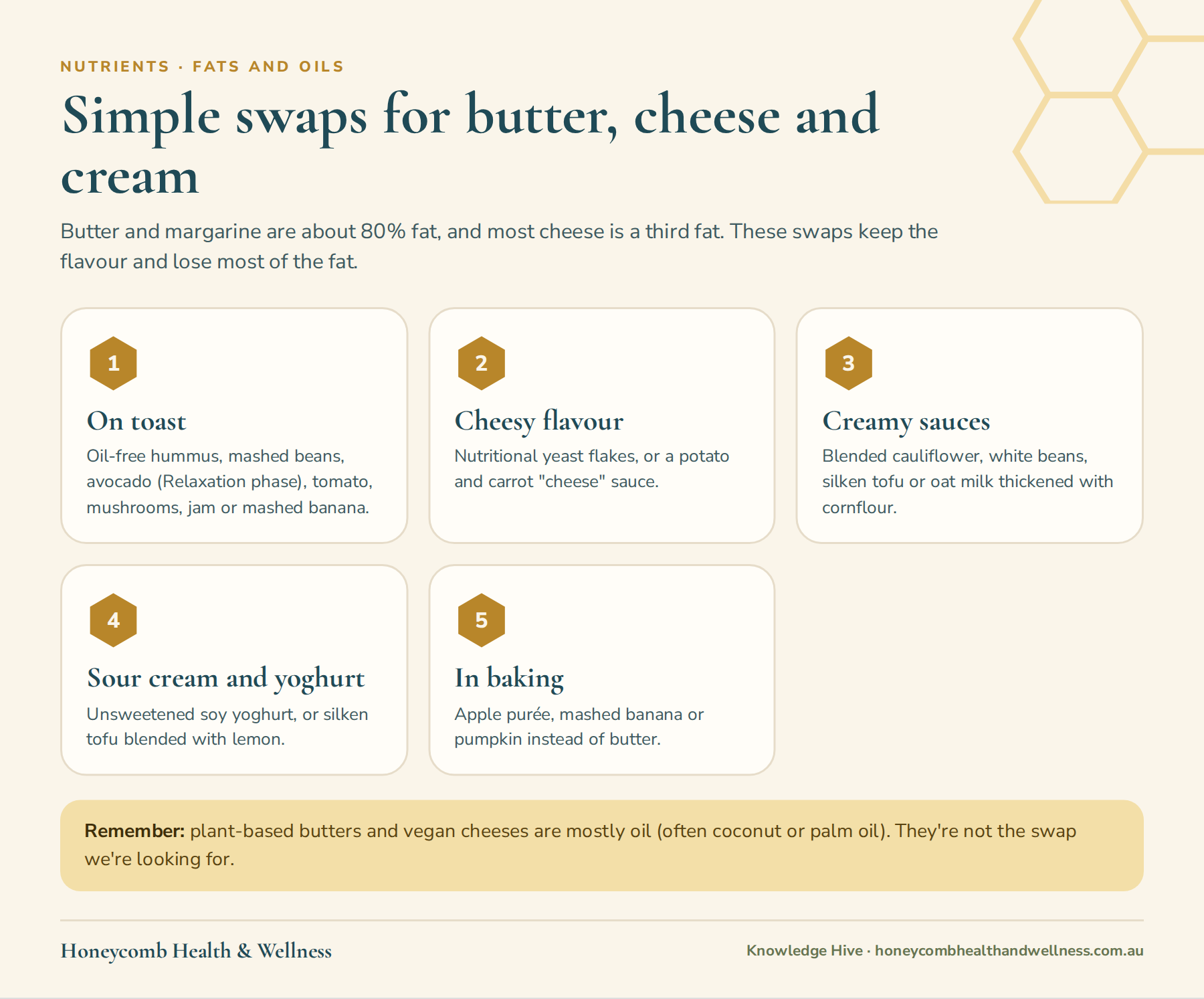
It’s easy to think a vegan butter or cheese is a healthy swap. But most are made mainly from coconut oil, palm oil or other oils, so they’re just as high in fat, and coconut and palm oil are high in saturated fat. They can be handy for a special occasion, but they’re not part of an everyday Honeycomb plate.
Toast and sandwich toppings
- Oil-free hummus or white bean dip
- Mashed chickpeas with lemon and herbs (a lovely “smash”)
- Grilled tomato and mushrooms with cracked pepper
- Mashed banana with cinnamon
- A thin layer of jam or fruit spread
- Avocado or a little peanut butter in the Relaxation phase
- Mustard, relish or chutney on sandwiches instead of butter or margarine
And here’s the simplest swap of all: many people find that good, fresh bread doesn’t need anything on it once they get used to it.
Getting that cheesy flavour
Nutritional yeast is the secret ingredient of plant-based cooking. These golden flakes have a savoury, nutty, cheesy flavour, and many brands are fortified with vitamin B12. Sprinkle them on pasta, popcorn, potatoes and salads.
For a cheesy sauce, blend cooked potato and carrot with nutritional yeast, a little Dijon mustard, lemon juice and garlic. It’s perfect for mac and “cheese”, nachos and baked potatoes.
Cream and creamy sauces
- Creamy pasta sauce: blend steamed cauliflower or white beans with garlic, plant milk and nutritional yeast.
- Creamy soups: blend in a cooked potato, or a handful of red lentils, instead of cream.
- Curries: use light coconut milk sparingly in the Relaxation phase, or try blended silken tofu or soy yoghurt stirred in at the end.
- Coffee: soy milk or oat milk instead of cream.
- Sour cream: unsweetened soy yoghurt, or silken tofu blended with lemon juice.
Making the change stick
- Swap one thing at a time. Start with the spread you use most, usually the one on your toast.
- Give your taste buds a few weeks. Just like salt, your taste for rich, fatty food changes, and many people find butter and cheese taste too greasy after a while.
- Keep swaps ready. A tub of oil-free hummus and a jar of nutritional yeast in the fridge make the healthy choice the easy choice.
Inside the Honeycomb Community, the Six-Week Nutrition Reset builds these swaps in week by week, with recipes for every meal. And our Cook with Honeycomb videos show you how to make oil-free hummus, mayonnaise and sauces.
Recipes to try
- Cheezy Creamy Pasta & Lentils
- Greek Chickpeas on Toast
- Creamy Turmeric Pumpkin Soup
- Black Bean Hummus Dip with Carrot Sticks
Every time you swap butter, margarine or cheese for a whole plant food, you’re turning off the fat tap a little more.
References
- Food Standards Australia New Zealand. Australian Food Composition Database (butter, cheddar cheese, cream).
- Barnard ND et al. A low-fat vegan diet and a conventional diabetes diet in the treatment of type 2 diabetes: a randomized, controlled, 74-wk clinical trial. American Journal of Clinical Nutrition. 2009;89(5):1588S-1596S.
How Honeycomb can help
You don’t have to work this out alone
This information is general education and is not a substitute for individual advice. Please speak with your health practitioner before making changes, especially if you take prescribed medication.
Keep going
You’re not doing this alone
This information is general education and is not a substitute for individual advice. Please speak with your health practitioner before making changes, especially if you take prescribed medication.