When I go through a microbiome stool test with a patient, there’s a small number on the report that most people skip right past: pH. It tells us how acidic or alkaline the inside of your large bowel is. And it says a lot about what your gut bacteria are being fed.
You may have heard that “acidic” is bad for you. In your bowel, it’s the other way around. A healthy bowel is meant to be gently acidic, and that acidity is one of the ways it protects itself.
Why a healthy bowel is gently acidic
When the bacteria in your large bowel ferment fibre and resistant starch, they make short-chain fatty acids: acetate, propionate and butyrate. These are acids, so they lower the pH of your bowel a little. That gentle acidity does some important jobs:
- It feeds your gut lining. Butyrate is the main fuel for the cells that line your bowel.
- It keeps the troublemakers in check. Many harmful bacteria don’t like an acidic environment, while the beneficial ones thrive in it (Duncan et al., 2009).
- It slows the making of secondary bile acids. The bacteria that turn bile into secondary bile acids, which can damage the bowel wall, work best at a higher pH.
- It helps you absorb minerals such as calcium and magnesium.
Compost heap or rubbish bin?
It’s kind of like this. Feed your gut bacteria plants, and it’s like a compost heap: the scraps break down into something rich and sweet-smelling that feeds the soil. Feed them mostly meat with very little fibre, and it’s like meat left in the rubbish bin on a hot day. It rots, it smells, and it attracts the wrong crowd. It’s not exactly like this scientifically, but it’s an easy way to understand it.
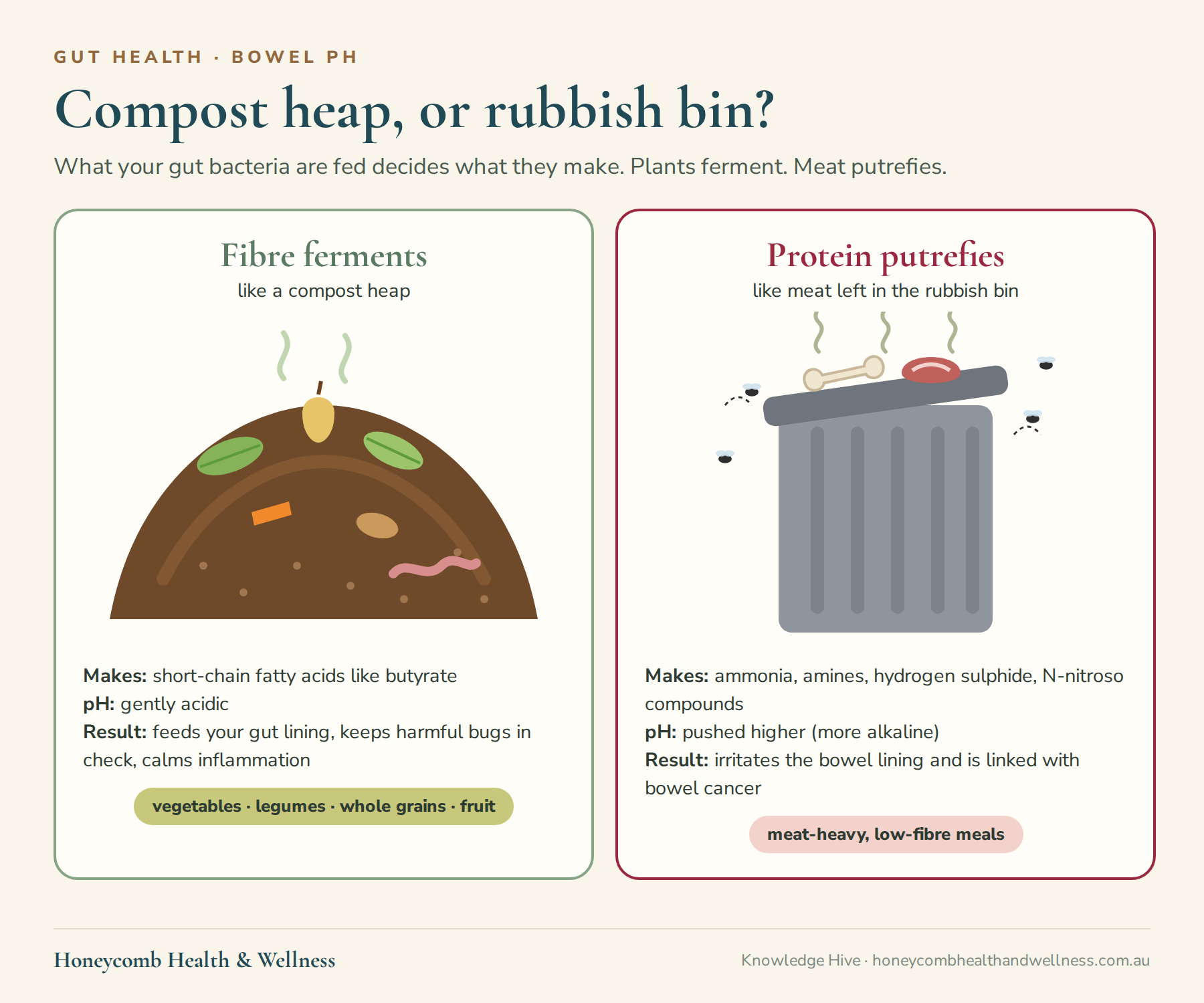
Scientists call the rubbish bin process putrefaction. When protein reaches the large bowel without much fibre alongside it, bacteria break it down into ammonia, amines, phenols, hydrogen sulphide (the rotten egg smell) and N-nitroso compounds. These irritate the bowel lining, and several are linked with bowel cancer. Putrefaction also pushes the pH of the bowel up, making it more alkaline.
What the research shows
Back in 1981, researchers noticed that people in countries with high rates of bowel cancer tended to have a higher (more alkaline) stool pH than people in countries where bowel cancer was rare, and they proposed that a higher colonic pH helps cancer develop (Thornton, 1981).
A striking study tested this directly. African Americans, who have a high risk of bowel cancer, swapped diets for two weeks with rural South Africans, who have a low risk. On a high-fibre, low-fat diet, the African American group made more butyrate, fewer secondary bile acids and showed fewer cancer-related changes in the bowel lining. On a meat-heavy, low-fibre diet, the rural South Africans moved the opposite way, in just two weeks (O’Keefe et al., 2015).
Processed meat and red meat
In 2015, the World Health Organization’s International Agency for Research on Cancer reviewed more than 800 studies and classified processed meat as Group 1, carcinogenic to humans, and red meat as Group 2A, probably carcinogenic to humans (Bouvard et al., 2015).
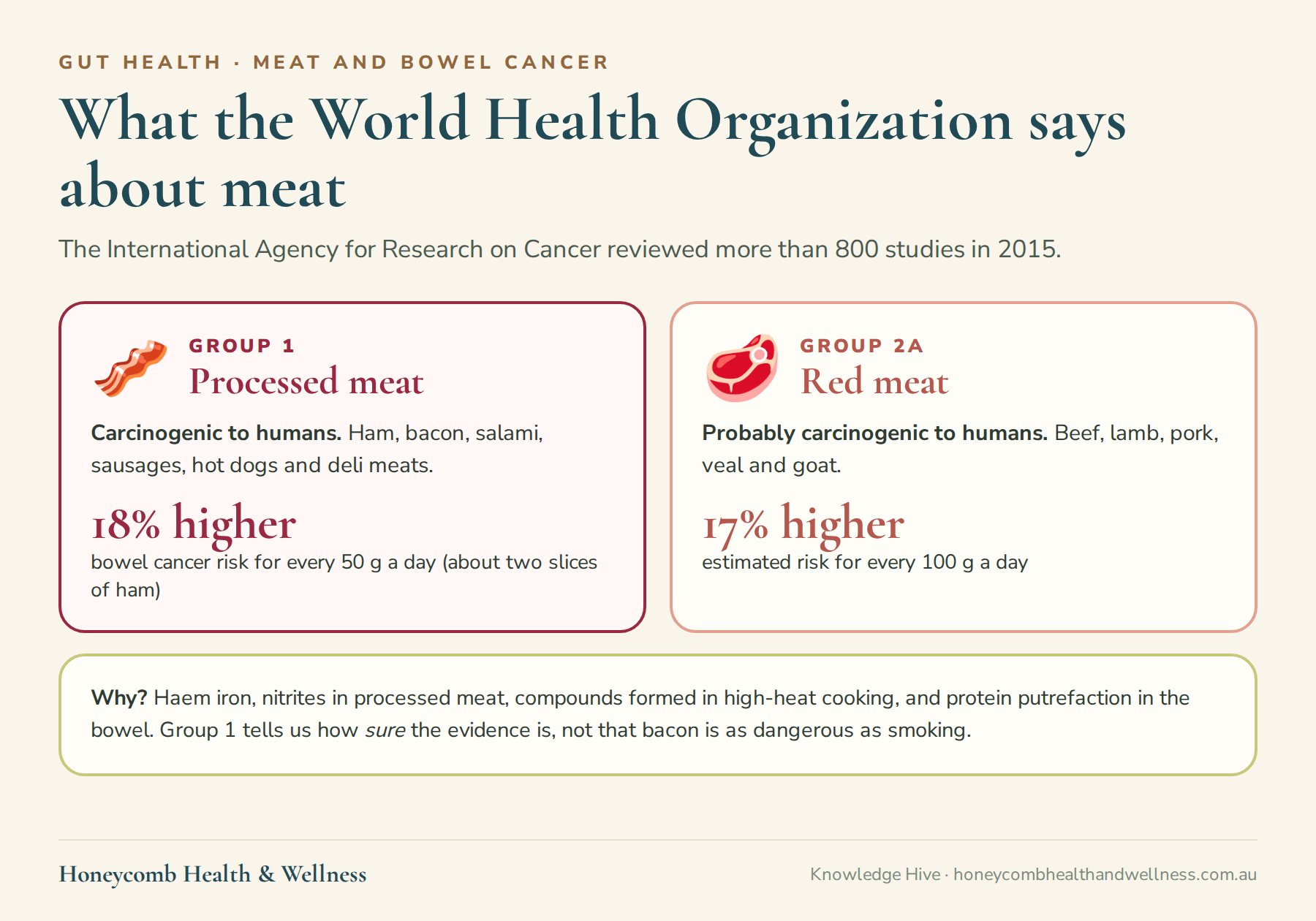
Every 50 grams of processed meat a day (about two slices of ham) raised bowel cancer risk by about 18%. The reasons include haem iron, the nitrates and nitrites used to cure processed meat, compounds formed when meat is cooked at high heat, and the putrefaction in the bowel we’ve just talked about. Cancer Council Australia recommends avoiding processed meat and keeping red meat to no more than 455 grams (cooked) a week. On a whole food, plant-based plate, you don’t need either.
One thing to know about that “Group 1” label: it tells us how sure the evidence is, not how big the risk is. Bacon isn’t as dangerous as smoking. But the evidence that it raises bowel cancer risk is just as solid.
Reading the pH on your stool test
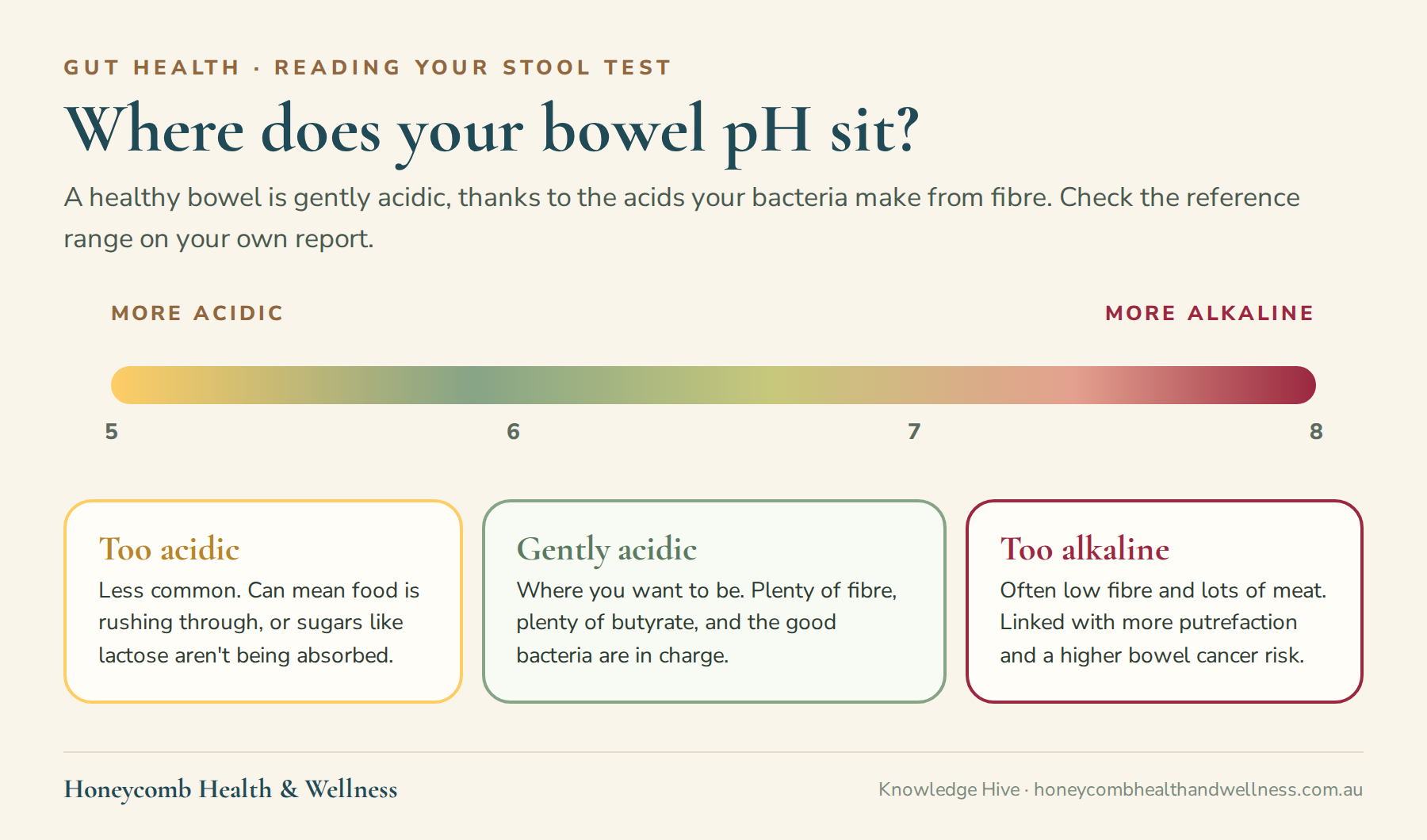
Every lab has its own reference range, so check the one on your report. As a guide:
- Gently acidic is where we want to be. It usually goes hand in hand with good levels of short-chain fatty acids and butyrate.
- Too alkaline often points to low fibre, lots of animal protein, or not enough of the bacteria that make short-chain fatty acids.
- Too acidic is less common. It can mean food is moving through too fast, or sugars such as lactose aren’t being absorbed and are fermenting all at once.
pH is one clue among many. In clinic, I read it alongside your short-chain fatty acids, inflammation markers, digestion markers and the bacteria present, and build a plan with food, herbs and supplements from there.
What you can start today
- Feed the compost heap: aim for 40 grams of fibre a day from vegetables, fruit, legumes and whole grains. (Read Feeding your gut garden.)
- Make legumes a daily habit. Lentils, chickpeas and beans are among the richest fibre foods there are.
- Cook, cool and eat potatoes, rice and oats for resistant starch, a favourite food of butyrate makers.
- Swap out processed meats: hummus, smashed beans or tofu in sandwiches instead of ham or salami.
- Go slowly if you’re new to fibre, and drink plenty of water. (Read Bloated or retaining fluid?.)
When to get checked
Please see your doctor promptly if you notice blood in your stool, a change in your bowel habits that lasts more than a few weeks, unexplained weight loss, or ongoing tummy pain or tiredness. And do the free National Bowel Cancer Screening Program test: you can request a kit from age 45, and it’s posted to you every two years from 50 to 74.
Recipes that help
- Slow Cooker Spiced Carrot & Lentil Soup
- Chickpea & Edamame Millet Salad
- Pineapple Chickpea Curry
- Apple Pie Overnight Oats
Curious what your own gut is telling you? Start with my free Health Assessment, and inside the Honeycomb Community the Six-Week Nutrition Reset is packed with fibre from day one.
Give your gut bacteria fibre, and they’ll keep your bowel gently acidic and protected.
References
- Duncan SH et al. The role of pH in determining the species composition of the human colonic microbiota. Environmental Microbiology. 2009;11(8):2112-2122.
- Thornton JR. High colonic pH promotes colorectal cancer. The Lancet. 1981;1(8229):1081-1083.
- O’Keefe SJD et al. Fat, fibre and cancer risk in African Americans and rural Africans. Nature Communications. 2015;6:6342.
- Bouvard V et al. Carcinogenicity of consumption of red and processed meat. The Lancet Oncology. 2015;16(16):1599-1600.
- Ou J et al. Diet, microbiota, and microbial metabolites in colon cancer risk in rural Africans and African Americans. American Journal of Clinical Nutrition. 2013;98(1):111-120.
- Cancer Council Australia. Meat and cancer risk: position statement.
How Honeycomb can help
You don’t have to work this out alone
This information is general education and is not a substitute for individual advice. Please speak with your health practitioner before making changes, especially if you take prescribed medication.
Keep going
You’re not doing this alone
This information is general education and is not a substitute for individual advice. Please speak with your health practitioner before making changes, especially if you take prescribed medication.