“I’m so bloated!” is one of the most common things I hear in clinic. But when we look more closely, “bloated” can mean two quite different things. Sometimes it’s gas in the gut. Sometimes it’s fluid held in the tissues. And sometimes it’s both.
Knowing which one you’ve got is the first step, because the fixes are different.
Bloating: gas in your gut
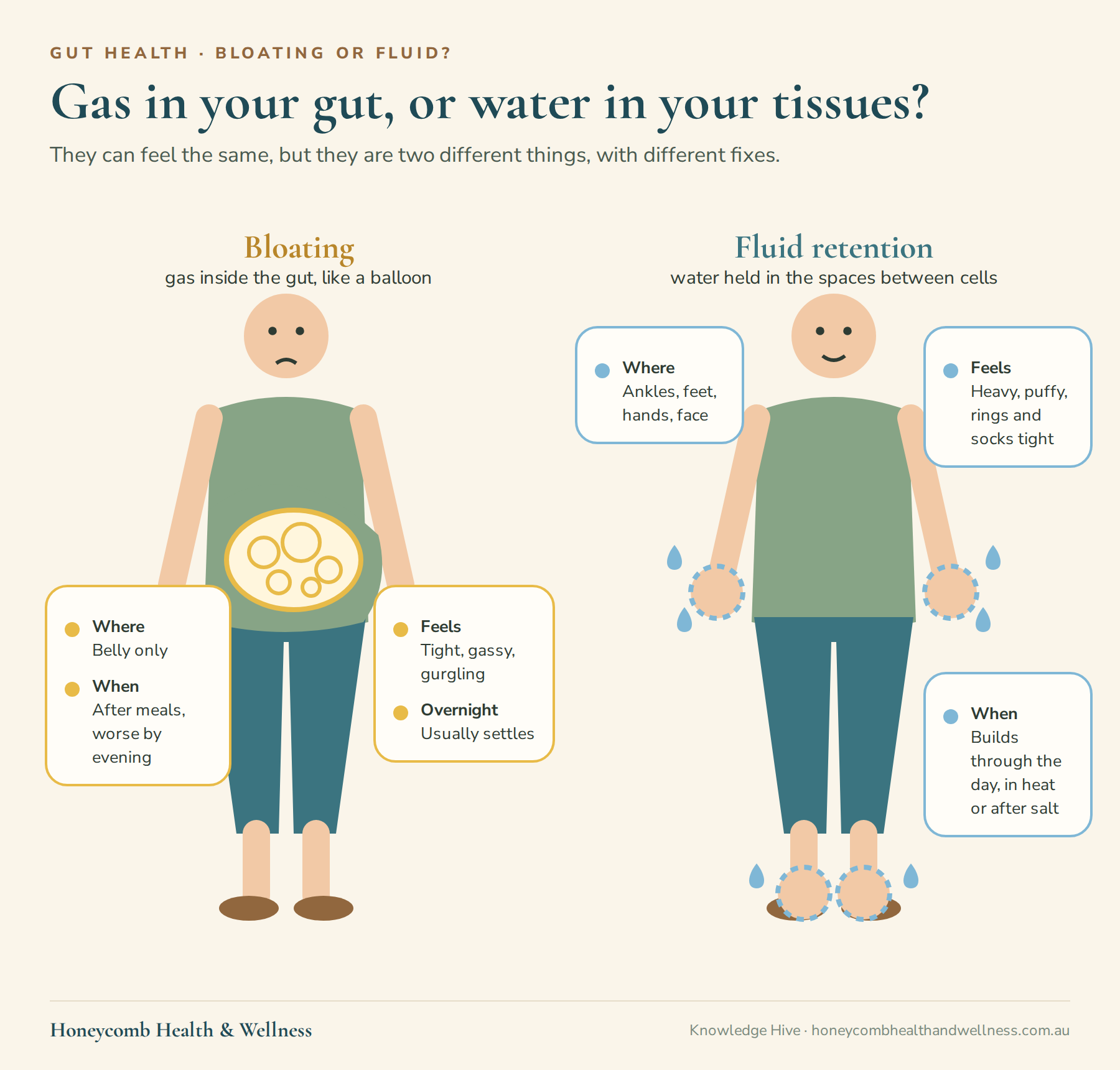
True bloating happens inside your digestive tract. Your belly feels tight, full or stretched, a bit like a balloon. You might hear gurgling, need to pass wind or burp, or feel uncomfortable after meals. It usually builds through the day and settles overnight, so many people wake with a flat tummy and go to bed looking pregnant.
Fluid retention: water in your tissues
Fluid retention happens outside the gut, in the spaces between your cells. It shows up as puffy ankles, feet, hands, fingers and face. Rings get tight, socks leave deep marks and your shoes feel snug by the afternoon. Your weight can jump a kilo or two in a day and drop again just as fast. (Read Fluid retention: how fruit, potassium and less salt help.)
Quick ways to tell
| Clue | More likely bloating | More likely fluid |
|---|---|---|
| Where | Belly only | Ankles, feet, hands, face (and sometimes belly) |
| When | After meals, worse by evening | Builds through the day, worse in heat or after salty food |
| How it feels | Tight, gassy, gurgling | Heavy, puffy, tight rings and socks |
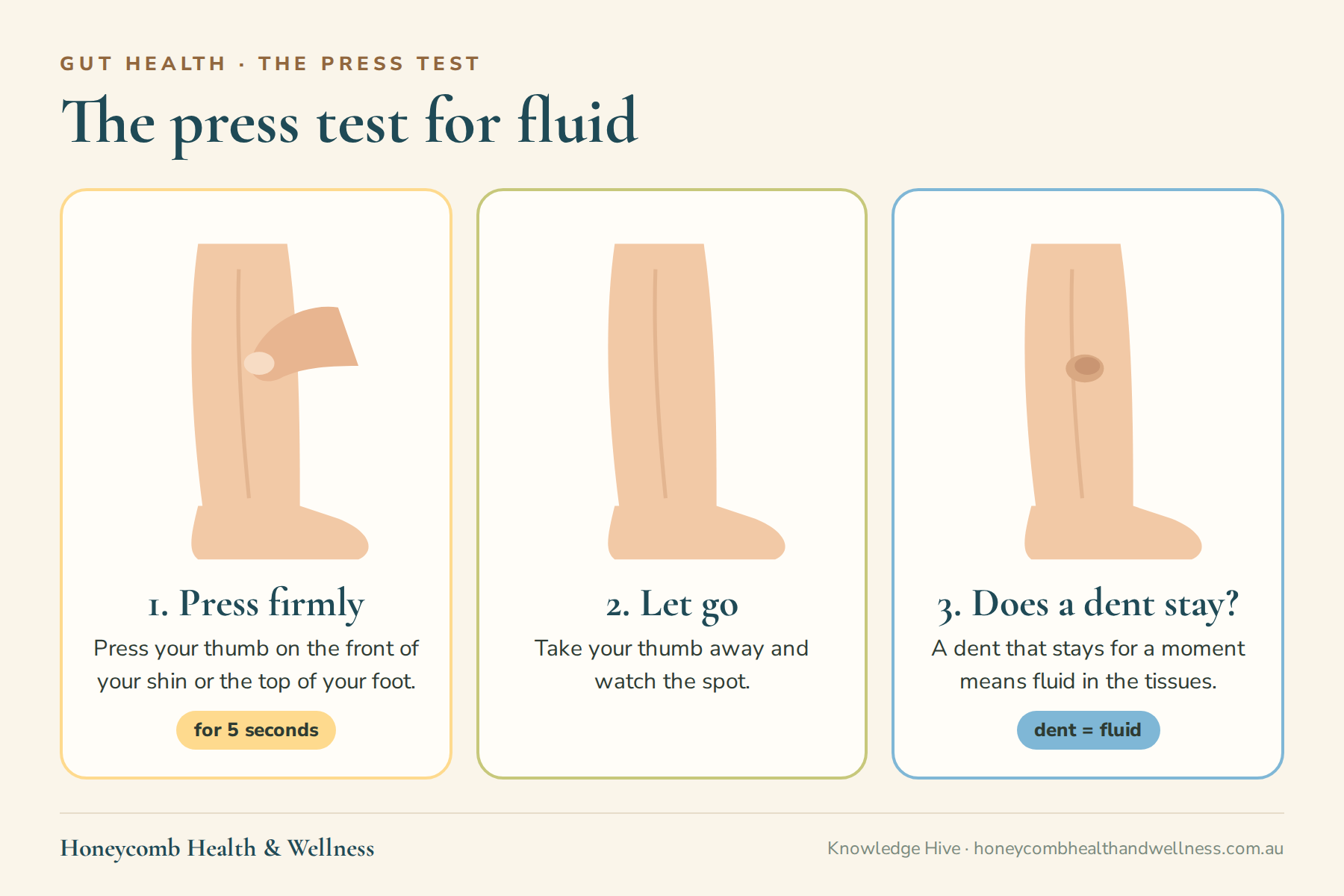
| Press test | No dent | A dent that stays for a moment |
| Overnight | Usually settles | Face may be puffy in the morning, legs better |
For the press test, press your thumb firmly on the front of your shin or the top of your foot for five seconds, then let go. If a dent stays for a moment, that’s fluid in the tissues.
What causes bloating?
- Eating fast or on the run. You swallow air, and food arrives poorly chewed.
- Low stomach acid. Remember the three little pigs? Strong acid in the big pot at the bottom of the chimney breaks food down properly. Weak acid means food arrives in the gut half-digested, and your gut bacteria have a feast.
- A sudden jump in fibre. Beans and wholegrains are wonderful, but your gut bacteria need a few weeks to adjust. Go slowly and they will.
- Constipation. When things back up, gas gets trapped behind.
- Stress. Your gut slows down when you’re in fight-or-flight. (Read Stress and your body.)
- Hormones. Many women feel bloated in the days before a period. (Read Puffy before your period.)
- Food sensitivities and gut imbalances, such as small intestinal bacterial overgrowth (SIBO), which testing can help uncover.
What helps bloating
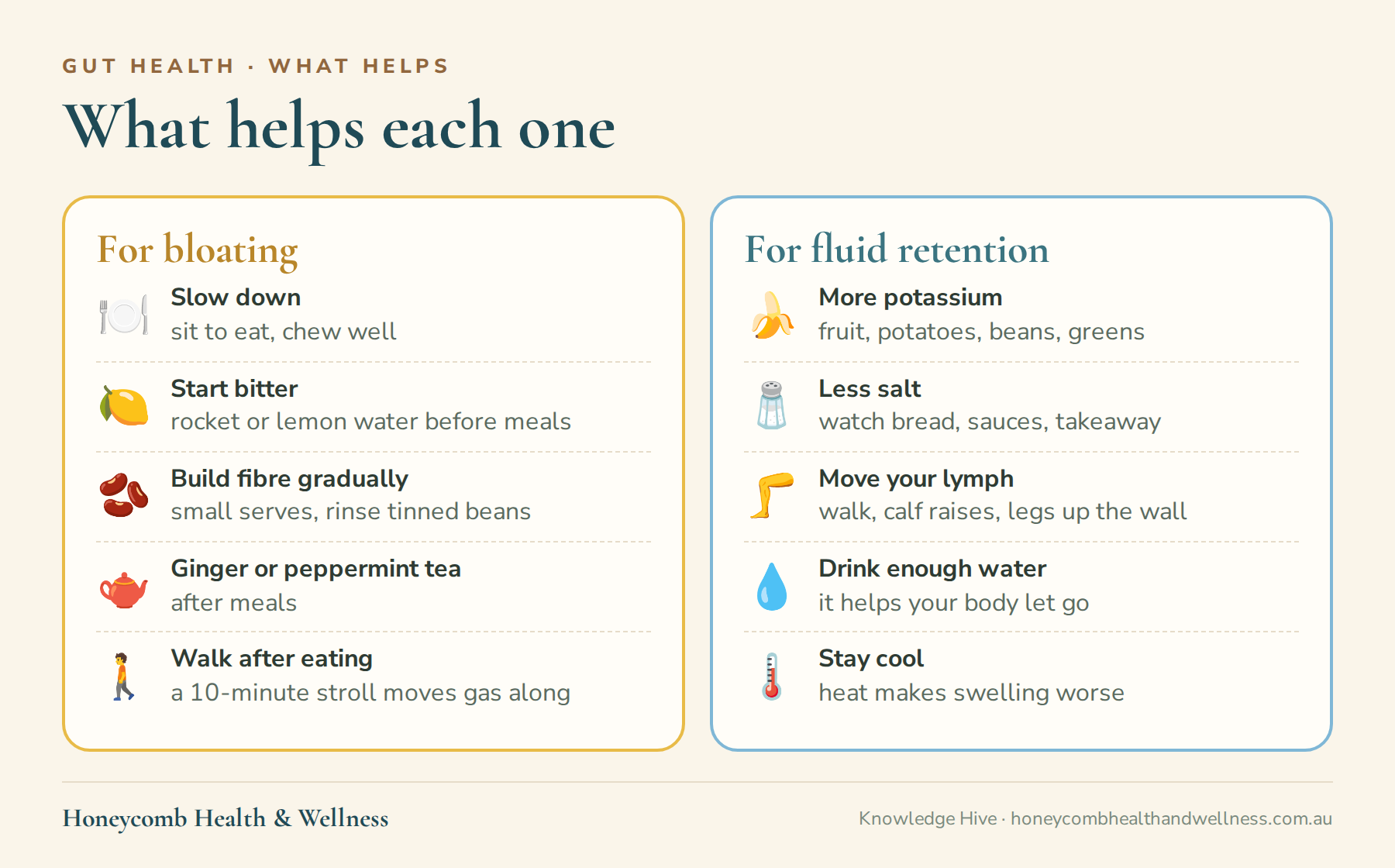
- Slow down. Sit to eat, chew each mouthful well and put your fork down between bites.
- Start bitter. A few rocket leaves or a squeeze of lemon in water before meals gets digestive juices flowing.
- Build fibre gradually. Start with small serves of well-cooked lentils, rinse tinned beans well and increase over a few weeks.
- Try ginger or peppermint tea after meals.
- Walk after eating. A 10-minute stroll helps move gas along.
- Feed your gut garden with a wide variety of plants. (Read Feeding your gut garden.)
What helps fluid retention
- More potassium: fruit, potatoes, beans and greens.
- Less salt, especially the hidden salt in bread, sauces and takeaway. (Read Retraining your taste buds for less salt.)
- Move your lymph with walking, calf raises and legs up the wall.
- Drink enough water. (Read How much water do you really need?.)
When to get checked
Most bloating and fluid retention is uncomfortable rather than serious. But please see a doctor promptly if you notice any of these:
- Bloating on most days for three weeks or more, especially if you’re over 50 (in women, this can be an early sign of ovarian cancer and is worth checking)
- Losing weight without trying, blood in your stool, or a change in bowel habits that doesn’t settle
- Swelling in only one leg, or swelling with breathlessness or chest pain
In clinic, I can look deeper with functional testing, such as a comprehensive stool test, to find out what’s driving ongoing bloating and build a plan with food, herbs and supplements.
Recipes that help
- Green Pineapple Ginger Smoothie with Aloe
- Potato & Leek Soup
- Apple Kohlrabi Salad
- Spicy Cucumber Juice
Bloating is gas in your gut. Fluid is water in your tissues. Find out which one it is, and you’ll know where to start.
References
- Lacy BE et al. Management of chronic abdominal distension and bloating. Clinical Gastroenterology and Hepatology. 2021;19(2):219-231.
- Goff BA et al. Development of an ovarian cancer symptom index: possibilities for earlier detection. Cancer. 2007;109(2):221-227.
- Trayes KP et al. Edema: diagnosis and management. American Family Physician. 2013;88(2):102-110.
How Honeycomb can help
You don’t have to work this out alone
This information is general education and is not a substitute for individual advice. Please speak with your health practitioner before making changes, especially if you take prescribed medication.
Keep going
You’re not doing this alone
This information is general education and is not a substitute for individual advice. Please speak with your health practitioner before making changes, especially if you take prescribed medication.