High blood pressure is often called the silent killer, and for good reason. Most people feel completely fine. There’s no pain or warning sign, just a number on a blood pressure cuff. Yet over years, that extra pressure quietly strains your heart, kidneys, brain and eyes.
About one in three Australian adults has high blood pressure, and many don’t know it. If you’re one of them, or your numbers are creeping up, I want you to know this is one of the areas where I see clients make real, measurable progress.
What your blood pressure numbers mean
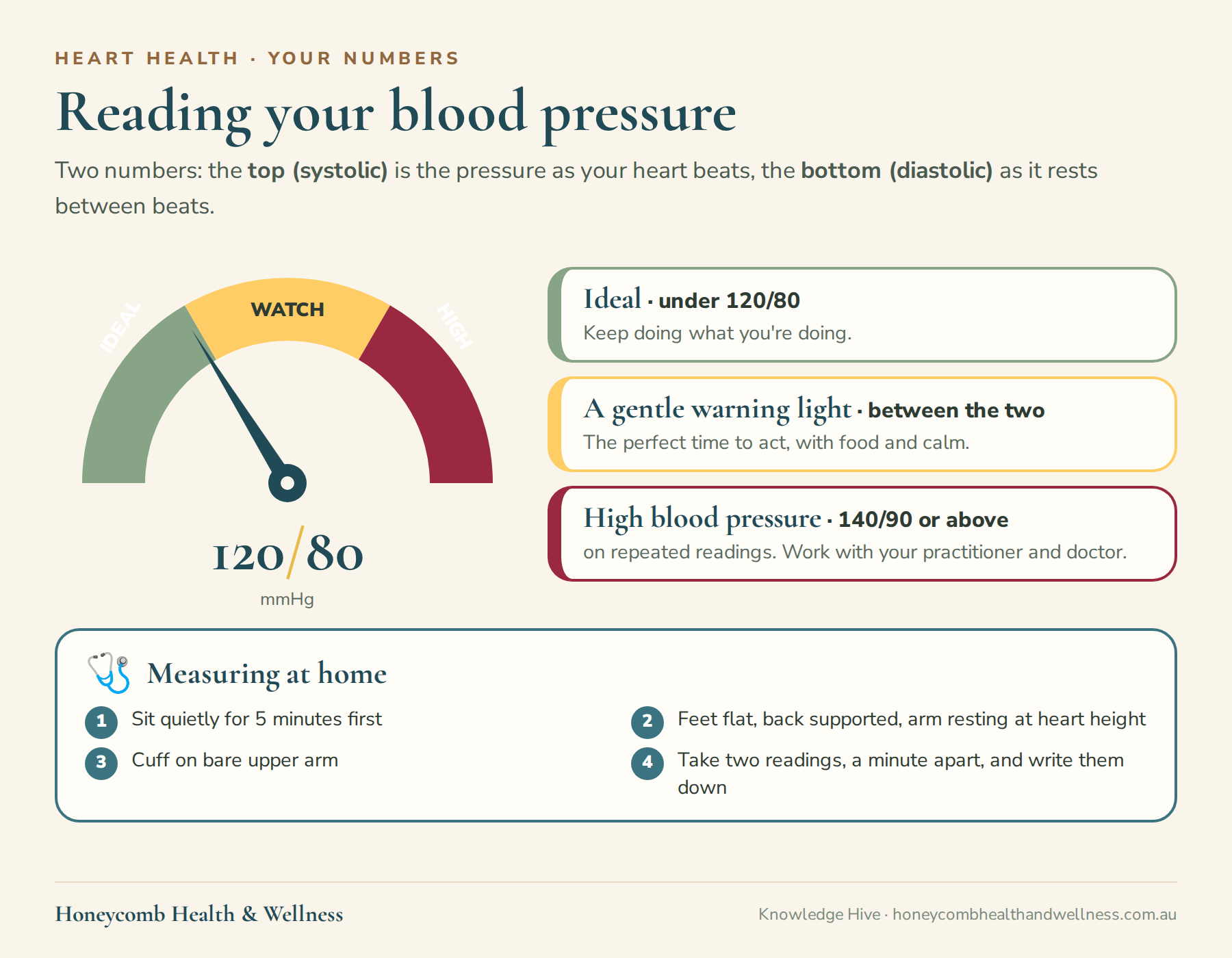
Blood pressure is the force of blood pushing against your artery walls. It’s written as two numbers:
- Systolic (the top number): the pressure when your heart beats.
- Diastolic (the bottom number): the pressure when your heart rests between beats.
A reading under 120/80 mmHg is generally considered ideal. A reading of 140/90 or above, on repeated measurements, is classed as high blood pressure. Anything in between is a gentle warning light, and a perfect time to act.
Why does blood pressure rise?
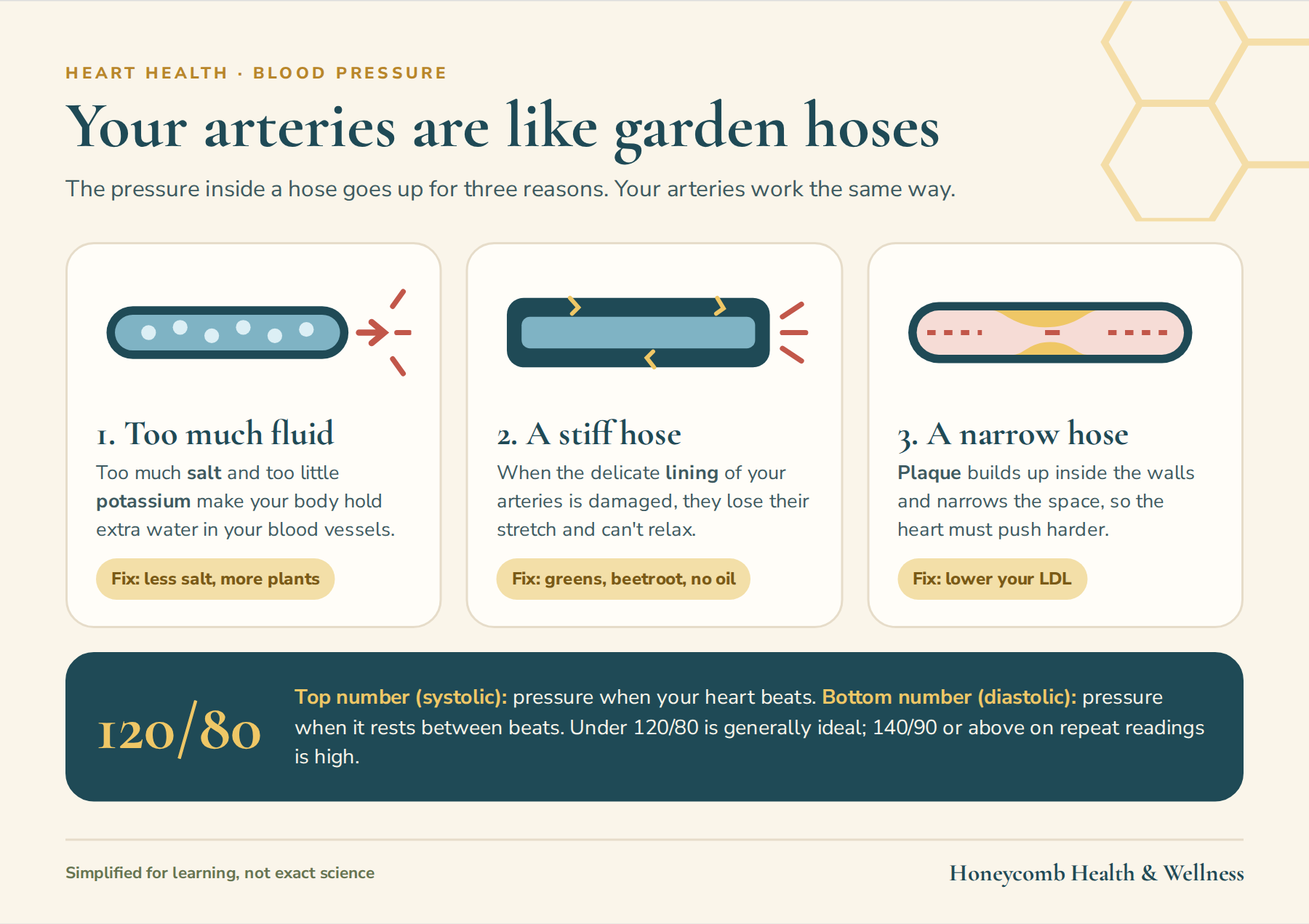
Think of your arteries as garden hoses. Pressure goes up when there’s more fluid in the hose, when the hose gets stiff, or when it narrows. Through the lens of the Four Pillars:
- Food: too much sodium and too little potassium make your body hold extra fluid. Processed food, alcohol and a diet high in saturated fat also stiffen and narrow arteries over time.
- Toxic load: smoking, heavy alcohol and some environmental toxins damage the delicate lining of your blood vessels (the endothelium).
- Stress and sleep: stress hormones tighten blood vessels and speed up your heart. Poor sleep and untreated sleep apnoea are strongly linked to high blood pressure.
- Habits: inactivity and extra weight around the middle make the heart work harder.
The salt story
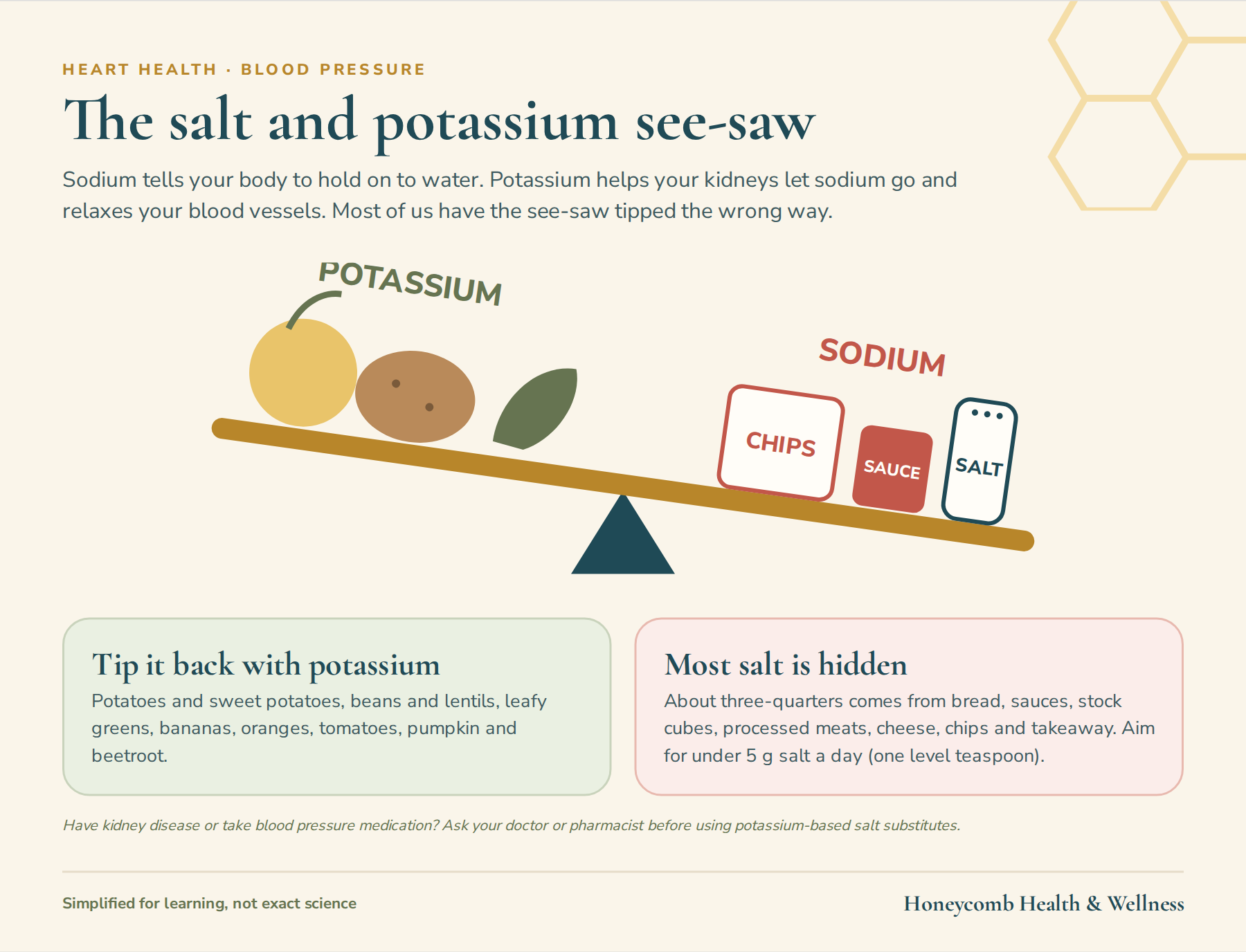
Sodium is essential in small amounts, but our modern diet is drowning in it. The World Health Organization recommends less than 5 grams of salt a day (about one level teaspoon, or 2,000 mg sodium). Most Australians eat close to double that.
Here’s the surprise: most of that salt doesn’t come from the salt shaker. Around three-quarters is already in packaged and restaurant foods: bread, sauces, stock cubes, processed meats, cheese, chips, crackers and takeaway.
The landmark DASH-Sodium trial tested this directly. People ate a diet rich in fruit, vegetables and whole grains at three different salt levels. Both changes helped on their own, but the biggest drop in blood pressure came from combining the two: more whole plant foods and less sodium (Sacks et al., 2001).
Potassium: the forgotten partner
Sodium and potassium work like a see-saw. Sodium tells your body to hold on to water; potassium helps your kidneys release sodium and relaxes your blood vessel walls. Our ancestors ate many times more potassium than sodium. Today it’s often the reverse.
Where is potassium found? Almost entirely in whole plant foods: potatoes and sweet potatoes, beans and lentils, leafy greens, bananas, oranges, tomatoes, pumpkin and beetroot. This is one reason a whole food, plant-based plate is so effective for blood pressure.
Important: if you have kidney disease or take medications such as ACE inhibitors, ARBs or potassium-sparing diuretics, talk to your doctor or pharmacist before increasing potassium or using “low-sodium” salt substitutes, which are often made with potassium.
Two foods worth knowing about
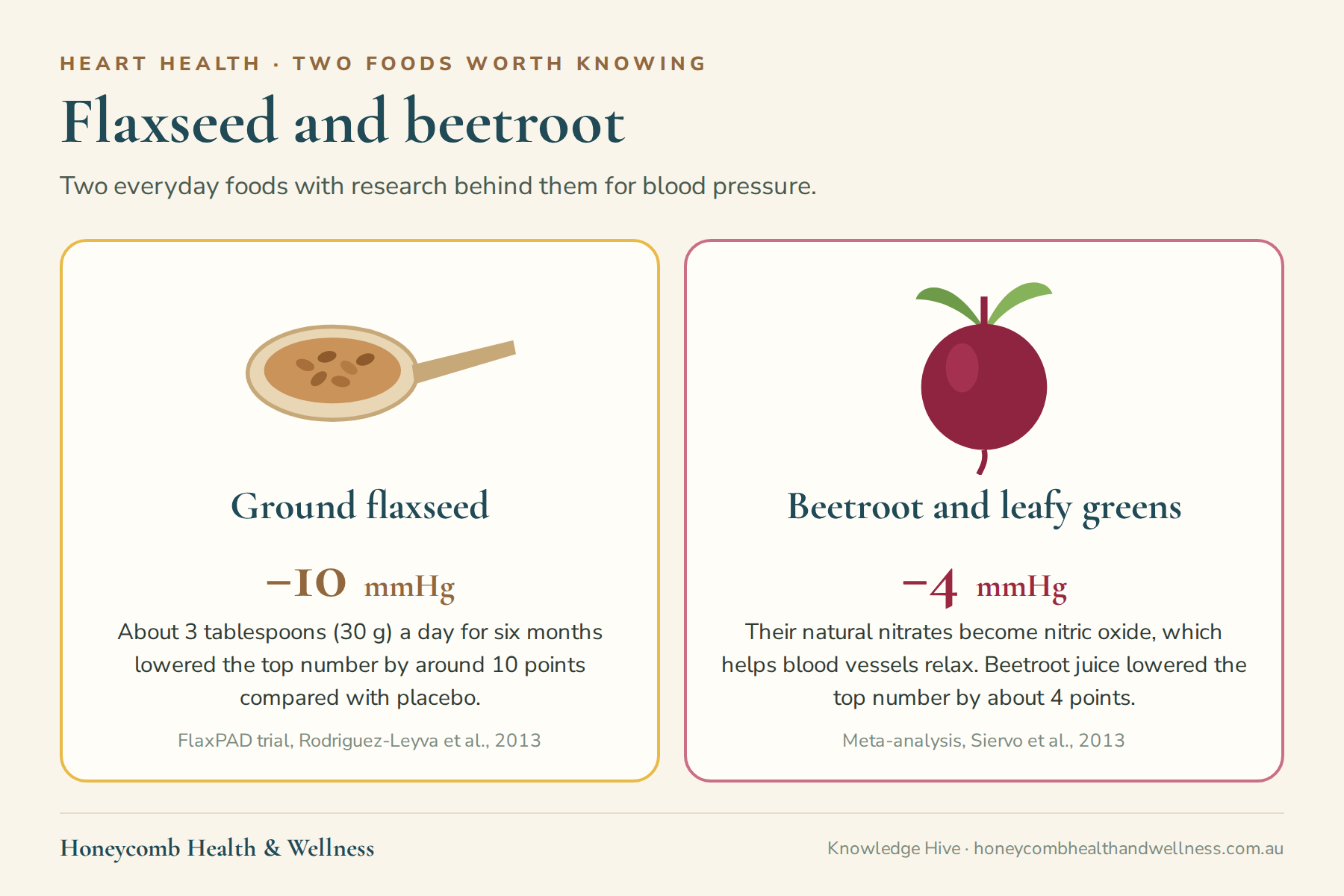
Ground flaxseed. In the FlaxPAD trial, adults with artery disease (most of whom had high blood pressure) who ate 30 grams (about three tablespoons) of ground flaxseed every day for six months saw their systolic pressure drop by around 10 mmHg compared with placebo (Rodriguez-Leyva et al., 2013). That’s similar to some medications.
Beetroot and leafy greens. These are rich in natural nitrates, which your body turns into nitric oxide, a molecule that helps blood vessels relax and widen. A meta-analysis of trials found beetroot juice lowered systolic blood pressure by a few points (Siervo et al., 2013).
What you can start today
- Cook more of your own meals. This is the single biggest way to cut hidden salt.
- Read the label. Choose foods with less than 120 mg sodium per 100 g where you can (400 mg per 100 g is the upper limit).
- Flavour with plants. Lemon, lime, garlic, ginger, herbs, smoked paprika, cumin, vinegar and mustard give big flavour without salt.
- Fill up on potassium. A potato, a cup of beans, a handful of greens and a piece of fruit every day.
- Add ground flaxseed. Build up to two or three tablespoons a day in oats, smoothies or a chia pudding.
- Measure at home. A home blood pressure monitor (validated, upper arm) lets you see your progress in real time.
The best part? Your taste buds adapt. After a few weeks of eating less salt, food you used to love often tastes too salty. That’s not willpower; that’s your body recalibrating.
Recipes that help
- Lentil & Potato Soup: potatoes and lentils for a potassium boost
- Green Veggie Juice: leafy greens and celery for natural nitrates
- Minestrone Soup: make it with low-salt stock and lots of herbs
Calm is a heart nutrient too
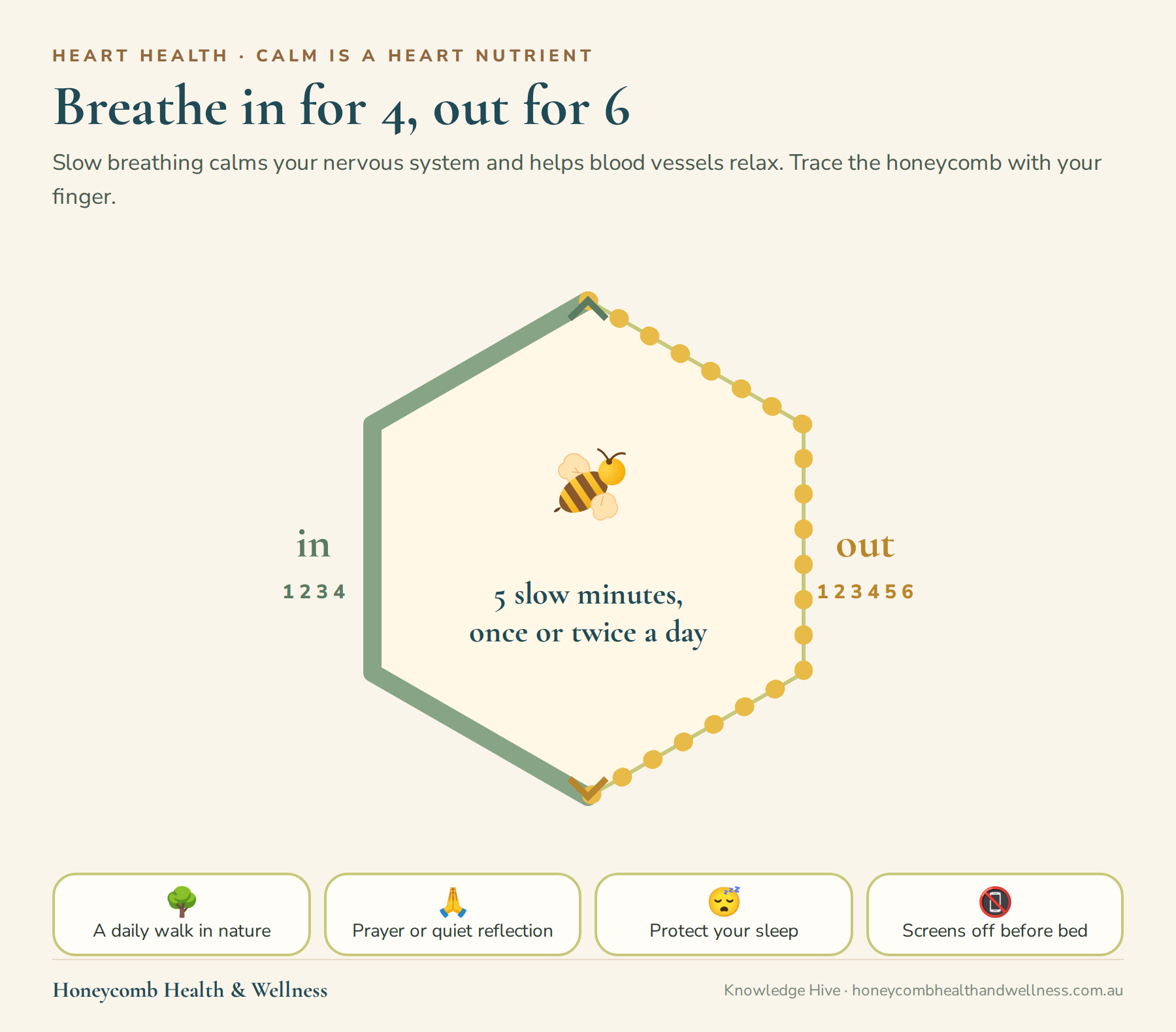
You can eat perfectly and still keep your blood pressure high if your nervous system never switches off. Slow breathing (in for four, out for six), a daily walk in nature, prayer or quiet reflection, and protecting your sleep are not luxuries. They’re part of the treatment. I like to remind clients that rest is built into the design of our bodies; it isn’t something we have to earn.
A note on medication: please don’t stop or change any prescribed medication on your own. When you change the way you eat, your numbers can move quickly, so keep your prescribing doctor informed so your doses can be reviewed as you improve.
References
- Sacks FM et al. Effects on blood pressure of reduced dietary sodium and the Dietary Approaches to Stop Hypertension (DASH) diet. New England Journal of Medicine. 2001;344(1):3-10.
- Rodriguez-Leyva D et al. Potent antihypertensive action of dietary flaxseed in hypertensive patients. Hypertension. 2013;62(6):1081-1089.
- Siervo M et al. Inorganic nitrate and beetroot juice supplementation reduces blood pressure in adults: a systematic review and meta-analysis. Journal of Nutrition. 2013;143(6):818-826.
- World Health Organization. Guideline: sodium intake for adults and children. Geneva: WHO; 2012.
- Heart Foundation (Australia). Guideline for the diagnosis and management of hypertension in adults. 2016.
Members’ Toolkit
Bring your blood pressure down
Ready to put this into practice? Members get these printables, plus the Six-Week Nutrition Reset, weekly lessons and the full recipe library.
How Honeycomb can help
You don’t have to work this out alone
This information is general education and is not a substitute for individual advice. Please speak with your health practitioner before making changes, especially if you take prescribed medication.
Keep going
You’re not doing this alone
This information is general education and is not a substitute for individual advice. Please speak with your health practitioner before making changes, especially if you take prescribed medication.