Inside your large bowel lives a whole world: trillions of bacteria, along with yeasts and other microbes. Together they’re called your gut microbiome, and they affect your digestion, immunity, mood, weight, hormones and even how well your body detoxes.
What decides which bacteria thrive? Mostly, what you eat.
Your gut is a garden
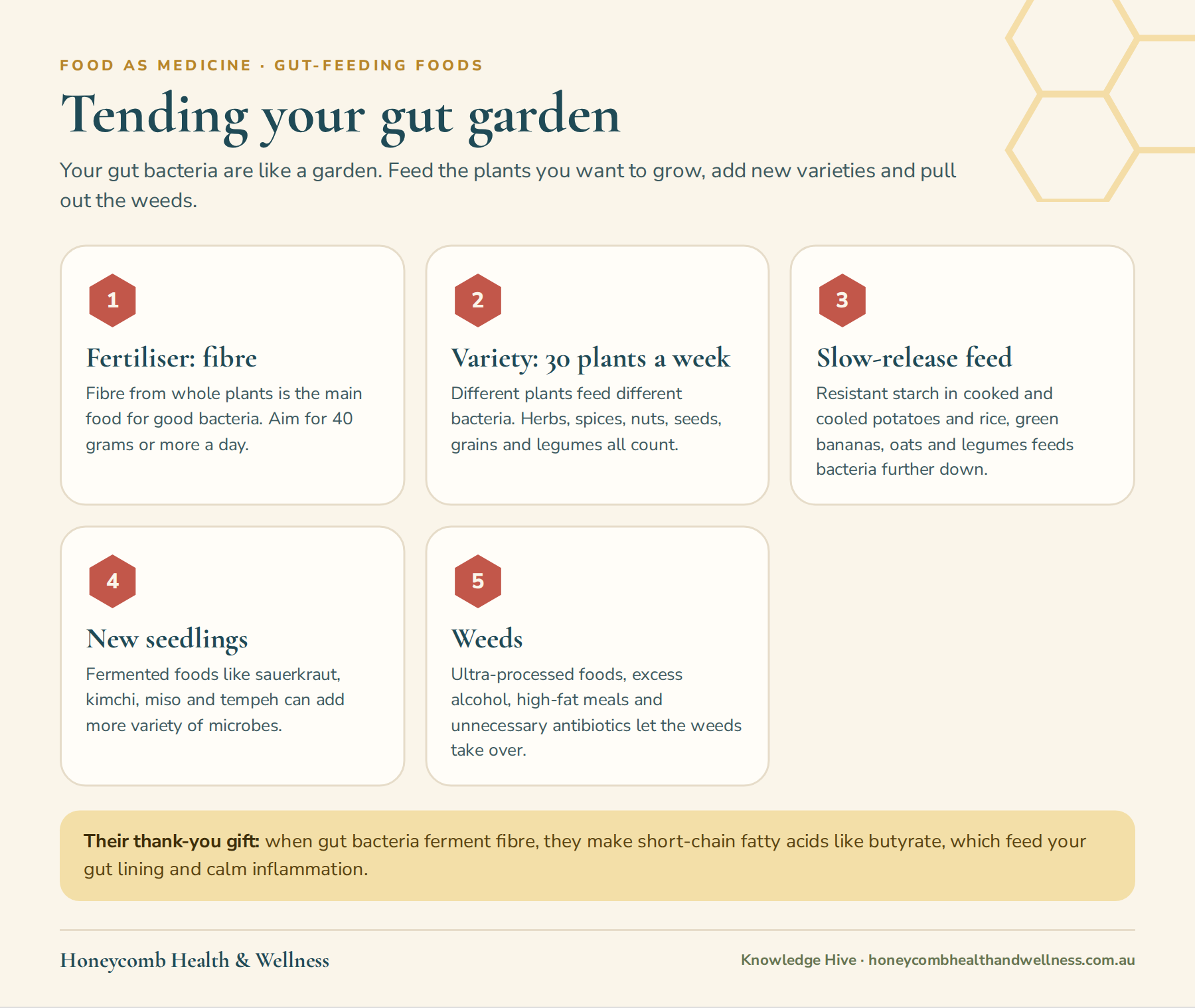
It’s kind of like a garden. The good bacteria are the vegetables and flowers you want to grow. Fibre is their fertiliser. Variety is planting lots of different seeds. Processed food, alcohol and stress are the weeds that take over when the garden is neglected. It’s not exactly like this scientifically, but it’s an easy way to understand it.
Fibre: the fertiliser
You can’t digest fibre, but your gut bacteria can. When they ferment it, they make short-chain fatty acids such as butyrate, which feed the cells lining your bowel, strengthen the gut wall and calm inflammation.
Most Australians eat around 20 to 25 grams of fibre a day. On a whole food, plant-based plate, 40 to 50 grams is easy. A striking study in mice showed that when fibre was removed from the diet, some gut bacteria disappeared, and after several generations they couldn’t be brought back just by adding fibre again (Sonnenburg et al., 2016). Feed your garden consistently!
Variety: aim for 30 plants a week
The American Gut Project, which studied more than 10,000 people, found that those who ate more than 30 different plants a week had a more diverse microbiome than those who ate 10 or fewer (McDonald et al., 2018). Diversity is a sign of a healthy, resilient gut.
Thirty sounds a lot, but it adds up quickly. Herbs, spices, nuts, seeds, grains, legumes, fruit and vegetables all count. Make it a game with your family: write the plants you eat on the fridge each week and see who can spot a new one.
Resistant starch: slow-release feed
Some starches resist digestion in the small intestine and travel further down to feed bacteria in the large bowel. You’ll find resistant starch in legumes, oats, slightly green bananas, and in potatoes, rice and pasta that have been cooked and cooled. Leftover potato salad is gut food!
Fermented foods: new seedlings
In a Stanford study, people who ate six servings a day of fermented foods for ten weeks increased the diversity of their gut microbes and lowered a range of inflammatory markers (Wastyk et al., 2021). For Honeycomb members, plant-based options include sauerkraut, kimchi, miso, tempeh, kombucha (watch the sugar) and coconut or soy yoghurt with live cultures.
Start small, with a tablespoon of sauerkraut or kimchi with dinner, and build up. Fermented foods are a support, not a replacement for fibre.
Pulling the weeds
- Ultra-processed food with emulsifiers and artificial sweeteners
- Excess alcohol
- High-fat, low-fibre meals
- Chronic stress and poor sleep
- Antibiotics when they’re not truly needed (always take them when they are)
Go slowly
If you’re adding lots of fibre and legumes, you might notice more wind and bloating at first. That’s your garden waking up! Increase slowly, drink plenty of water, chew well and soak and rinse dried beans. Most people adjust within two to four weeks. If bloating is severe or ongoing, read Understanding IBS, or book in so we can look deeper with functional gut testing.
Recipes that help
- Tofu Kimchi Stew
- Miso Dressing
- One Pan Tempeh & Veggies
- Minestrone Soup (count the plants!)
Feed the garden you want to grow.
References
- Sonnenburg ED et al. Diet-induced extinctions in the gut microbiota compound over generations. Nature. 2016;529(7585):212-215.
- McDonald D et al. American Gut: an open platform for citizen science microbiome research. mSystems. 2018;3(3):e00031-18.
- Wastyk HC et al. Gut-microbiota-targeted diets modulate human immune status. Cell. 2021;184(16):4137-4153.
- Reynolds A et al. Carbohydrate quality and human health: a series of systematic reviews and meta-analyses. Lancet. 2019;393(10170):434-445.
How Honeycomb can help
You don’t have to work this out alone
This information is general education and is not a substitute for individual advice. Please speak with your health practitioner before making changes, especially if you take prescribed medication.
Keep going
You’re not doing this alone
This information is general education and is not a substitute for individual advice. Please speak with your health practitioner before making changes, especially if you take prescribed medication.