Heavy periods, PMS, sore breasts, mood swings, a rough perimenopause, endometriosis or fibroids. These are some of the most common reasons women come to see me in clinic. And while every woman’s story is different, one piece of the puzzle comes up again and again: how well the body clears used hormones.
Hormones need clearing, not just making
We often think of hormone problems as having too little or too much of something being made. But your body also has to break down and remove hormones once they’ve done their job. That’s the job of your liver and your gut, working as a team.
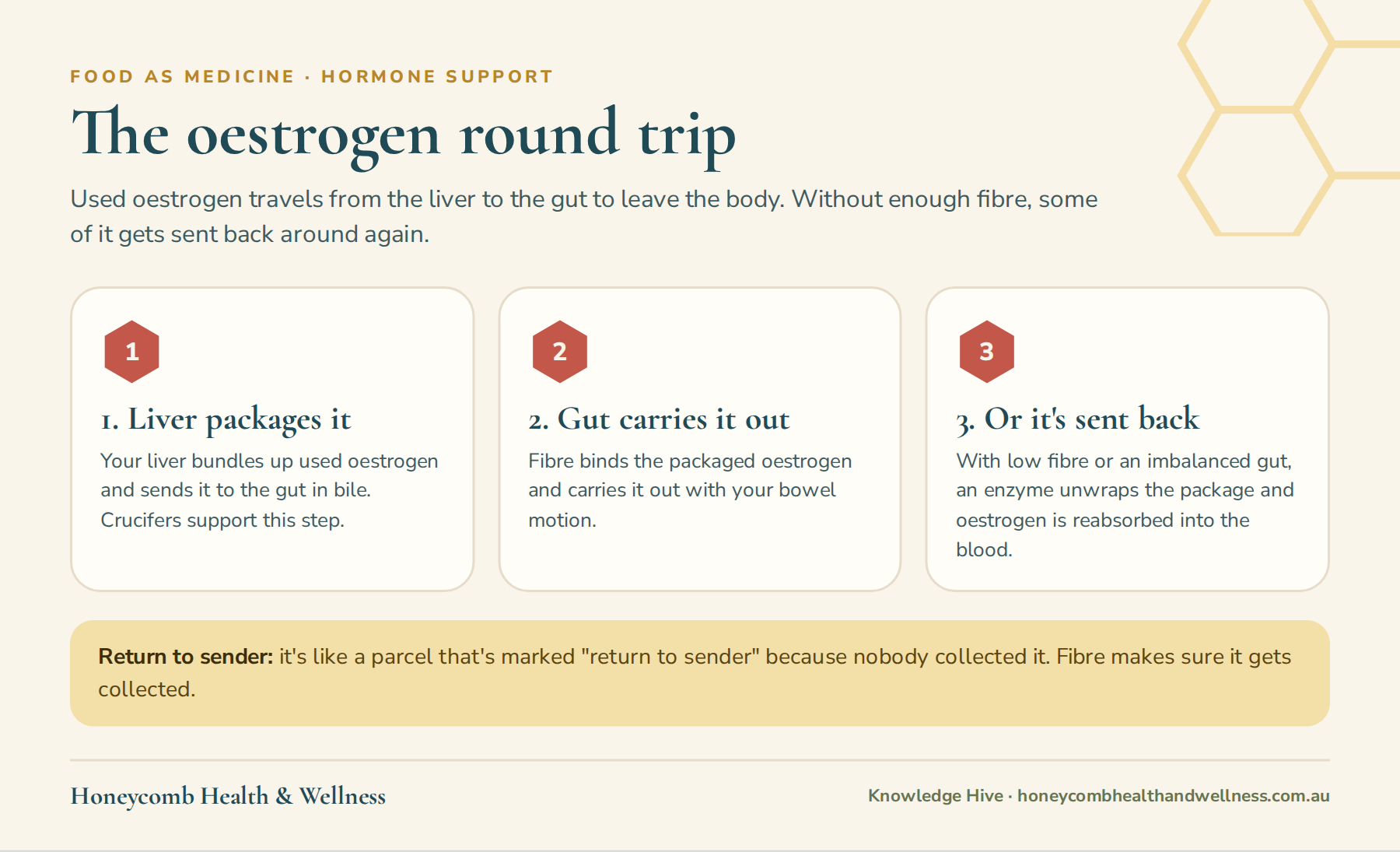
It’s a bit like posting a parcel. Your liver wraps up the used oestrogen and sends it to the gut. Fibre is the courier that picks it up and takes it out of the body. But if there’s no courier, the parcel sits around, gets marked “return to sender” and ends up back in your bloodstream. It’s not exactly like this scientifically, but it’s an easy way to understand it.
Scientists call the gut bacteria involved in this the “estrobolome”. Some produce an enzyme (beta-glucuronidase) that unwraps the parcel. A gut that’s low in fibre and high in these bacteria can mean more oestrogen recirculates.
What the research shows
A classic study found that vegetarian women, who ate more fibre, excreted two to three times more oestrogen in their bowel motions and had lower blood levels than women eating a typical Western diet (Goldin et al., 1982). In the BioCycle Study, higher fibre intake was associated with lower oestrogen levels across the menstrual cycle (Gaskins et al., 2009).
Foods that support hormone balance
- Fibre, fibre, fibre: vegetables, fruit, legumes and whole grains, aiming for 40 grams or more a day.
- Ground flaxseed: one to two tablespoons a day. Flax is rich in lignans and fibre. In a small study, women eating flaxseed had more regular ovulation and a longer second half of the cycle (Phipps et al., 1993).
- Cruciferous vegetables: broccoli, cabbage, kale and Brussels sprouts support the liver’s processing of oestrogen.
- Soy foods: tofu, tempeh, edamame and soy milk. Despite the myths, research shows whole soy foods are safe and may ease hot flushes and protect breast and bone health (Messina, 2016).
- Whole starches: sweet potatoes, oats, brown rice and legumes keep blood sugar steady, which matters for PCOS and cycle health.
- Colourful plants for antioxidants, and pumpkin seeds and leafy greens for zinc and magnesium.
What to go easy on
- Alcohol, which raises oestrogen levels and burdens the liver
- Processed and high-fat animal foods, which are linked to higher oestrogen levels
- Sugary foods and refined carbohydrates, which disrupt insulin and the hormones it affects
- Plastics and fragrances that can mimic hormones. Read Plastics and your hormones.
Don’t forget the basics
A bowel motion every day, ideally soft and easy to pass, is one of the simplest signs that oestrogen is leaving the body as it should. Stress and poor sleep also disrupt hormone balance, because cortisol is made from the same building blocks as your sex hormones.
In clinic, I often use functional hormone testing to see how you’re making and clearing hormones, and then create a plan with nutrition, herbal medicine and targeted supplements to support your cycle or your transition through menopause.
Recipes that help
- Chocolate Blueberry Chia & Flax Pudding
- Silken Tofu Scramble
- Mushroom & Edamame Stir Fry
- Apple Cinnamon Stuffed Sweet Potato
Supporting your hormones often starts in the most unglamorous place: your bowel.
A note on medication: please don’t stop or change any prescribed medication on your own. When you change the way you eat, your numbers can move quickly, so keep your prescribing doctor informed so your doses can be reviewed as you improve. This includes the contraceptive pill and menopausal hormone therapy.
References
- Goldin BR et al. Estrogen excretion patterns and plasma levels in vegetarian and omnivorous women. New England Journal of Medicine. 1982;307(25):1542-1547.
- Gaskins AJ et al. Effect of daily fiber intake on reproductive function: the BioCycle Study. American Journal of Clinical Nutrition. 2009;90(4):1061-1069.
- Phipps WR et al. Effect of flax seed ingestion on the menstrual cycle. Journal of Clinical Endocrinology and Metabolism. 1993;77(5):1215-1219.
- Messina M. Soy and health update: evaluation of the clinical and epidemiologic literature. Nutrients. 2016;8(12):754.
How Honeycomb can help
You don’t have to work this out alone
This information is general education and is not a substitute for individual advice. Please speak with your health practitioner before making changes, especially if you take prescribed medication.
Keep going
You’re not doing this alone
This information is general education and is not a substitute for individual advice. Please speak with your health practitioner before making changes, especially if you take prescribed medication.