

Inflammation gets a bad name, but it’s actually one of your body’s best friends. Cut your finger and the area goes red, warm and swollen as your immune system rushes in to heal it. Then it settles. That’s healthy, short-term inflammation.
The trouble is chronic, low-grade inflammation: a smouldering fire that never quite goes out. You can’t see it or feel it directly, but over years it’s linked to heart disease, type 2 diabetes, fatty liver, joint pain, some cancers, depression and even dementia.
The campfire
It’s kind of like a campfire. A small, controlled fire keeps you warm and cooks your dinner. That’s acute inflammation doing its job. But if you keep throwing on fuel and never let it die down, sparks start landing in the bush around it. That’s chronic inflammation affecting your blood vessels, joints, gut and brain. It’s not exactly like this scientifically, but it’s an easy way to understand it.
Food is one of the biggest things you put on the fire each day, so it’s also one of the most powerful ways to calm it.
What the research shows
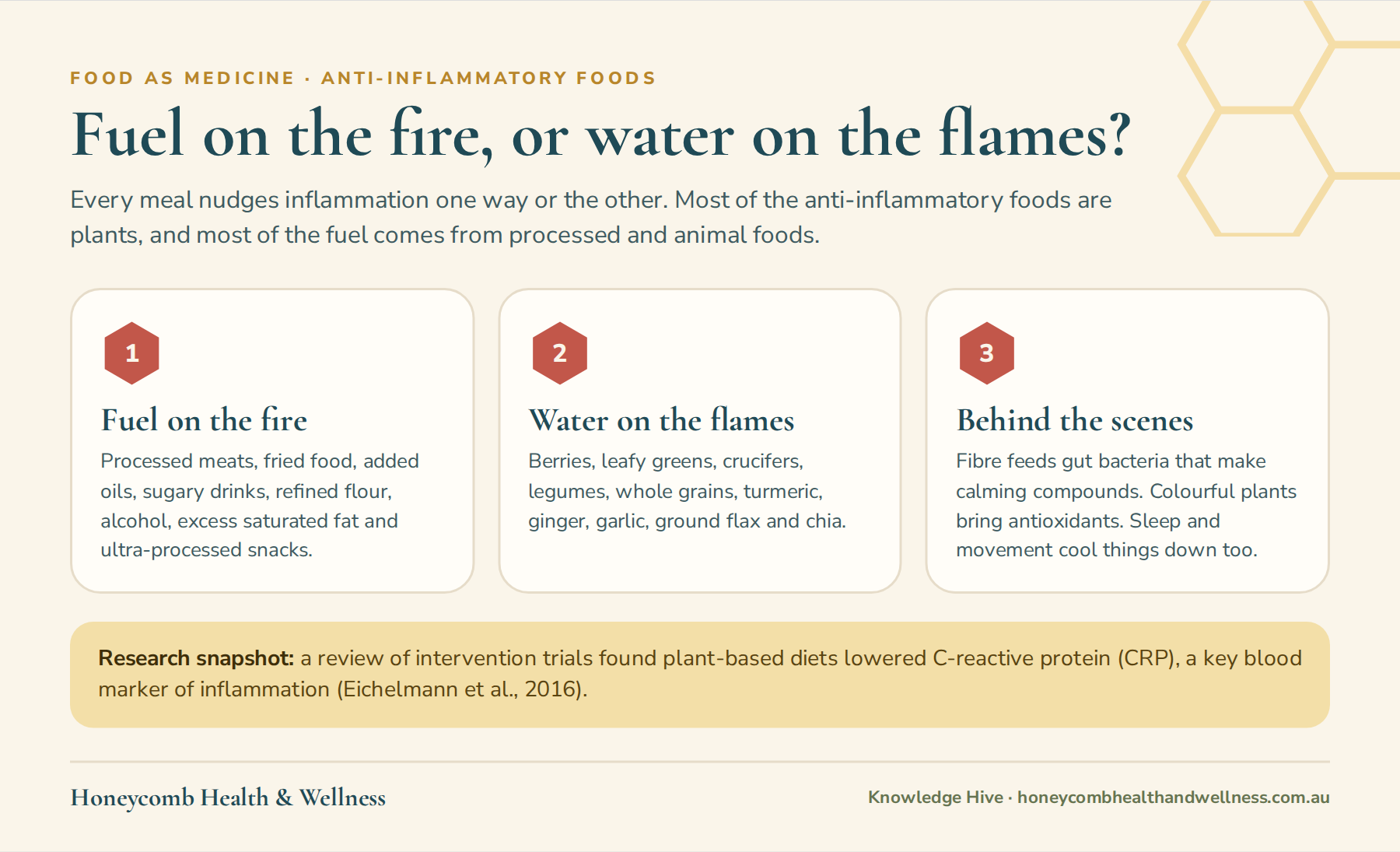
Researchers have scored nearly 2,000 studies on how different foods and nutrients affect inflammation, creating the Dietary Inflammatory Index (Shivappa et al., 2014). Plant foods, fibre, spices like turmeric and ginger, and the colourful compounds in fruit and vegetables score as anti-inflammatory. Saturated fat, trans fats and refined carbohydrates score as pro-inflammatory.
When researchers pooled intervention trials, plant-based diets reduced CRP, a key marker of inflammation, compared with other diets (Eichelmann et al., 2016). It’s one of the reasons so many of my clients find their aches and pains ease when they change their plate.
Signs of a smouldering fire
- Joint aches and stiffness
- Fatigue and brain fog
- Puffiness and fluid retention
- Skin flare-ups like eczema, psoriasis and acne
- Gut problems and food sensitivities
- A raised CRP or other inflammatory markers on a blood test
- Weight around the middle
In clinic, I look at inflammation markers alongside your other blood tests and functional testing to find what’s driving the fire for you, whether it’s the gut, blood sugar, a hidden infection, stress or your environment.
What you can start today
- Eat the rainbow. Aim for at least three colours of plants at every meal. The pigments are your antioxidants.
- A handful of berries a day, fresh or frozen.
- Greens and crucifers daily: spinach, kale, broccoli, cabbage, rocket.
- Spice it up. Turmeric (with a pinch of black pepper), ginger, garlic, cinnamon and rosemary.
- Ground flax or chia every day for plant omega-3s.
- Swap the fuel. Replace processed meats with legumes, oils with water or stock sautéing, and white bread with whole grains.
- Sleep and move. Poor sleep and sitting all day both raise inflammatory markers.
A note about oils
Even olive oil is a concentrated, refined fat with the fibre and most of the nutrients removed. At Honeycomb, we get our fats from whole foods instead, and leave the oil out. Read more in Why oils aren’t heart food and Oils, gut health and inflammation.
Recipes that help
- Creamy Turmeric Pumpkin Soup
- Berry Hemp Smoothie
- Green Pineapple Ginger Smoothie with Aloe
- Pineapple Chickpea Curry
Every meal is a chance to add water to the flames.
A note on medication: please don’t stop or change any prescribed medication on your own. When you change the way you eat, your numbers can move quickly, so keep your prescribing doctor informed so your doses can be reviewed as you improve.
References
- Shivappa N et al. Designing and developing a literature-derived, population-based dietary inflammatory index. Public Health Nutrition. 2014;17(8):1689-1696.
- Eichelmann F et al. Effect of plant-based diets on obesity-related inflammatory profiles: a systematic review and meta-analysis of intervention trials. Obesity Reviews. 2016;17(11):1067-1079.
- Furman D et al. Chronic inflammation in the etiology of disease across the life span. Nature Medicine. 2019;25(12):1822-1832.
How Honeycomb can help
You don’t have to work this out alone
This information is general education and is not a substitute for individual advice. Please speak with your health practitioner before making changes, especially if you take prescribed medication.
Keep going
You’re not doing this alone
This information is general education and is not a substitute for individual advice. Please speak with your health practitioner before making changes, especially if you take prescribed medication.