A racing heart. A tight chest. A mind that won’t stop going over things at 2am. A tummy that churns before you’ve even left the house. Anxiety is one of the most common things people bring to me in clinic, and it’s one of the most misunderstood. It isn’t weakness, and it isn’t “all in your head”. It’s your whole body.
About one in six Australians will experience an anxiety condition this year. The good news is that anxiety responds well to support, and there’s a lot you can do day to day.
Your built-in alarm system
Your nervous system has a brilliant alarm built in. When it senses danger, it switches on fight-or-flight: adrenaline and cortisol surge, your heart and breathing speed up, your muscles tense and digestion pauses. That’s exactly what you need to jump out of the way of a car.
Anxiety happens when that alarm becomes too sensitive and goes off when there’s no real danger, or stays on long after the danger has passed.
From the Honeycomb kitchen
 Coconut Curry Tofu with Sweet Potato Noodles
 Crispy Tofu Meal Prep Bowls
 Pesto Barley & Tofu Bowl
The smoke alarm and the burnt toast
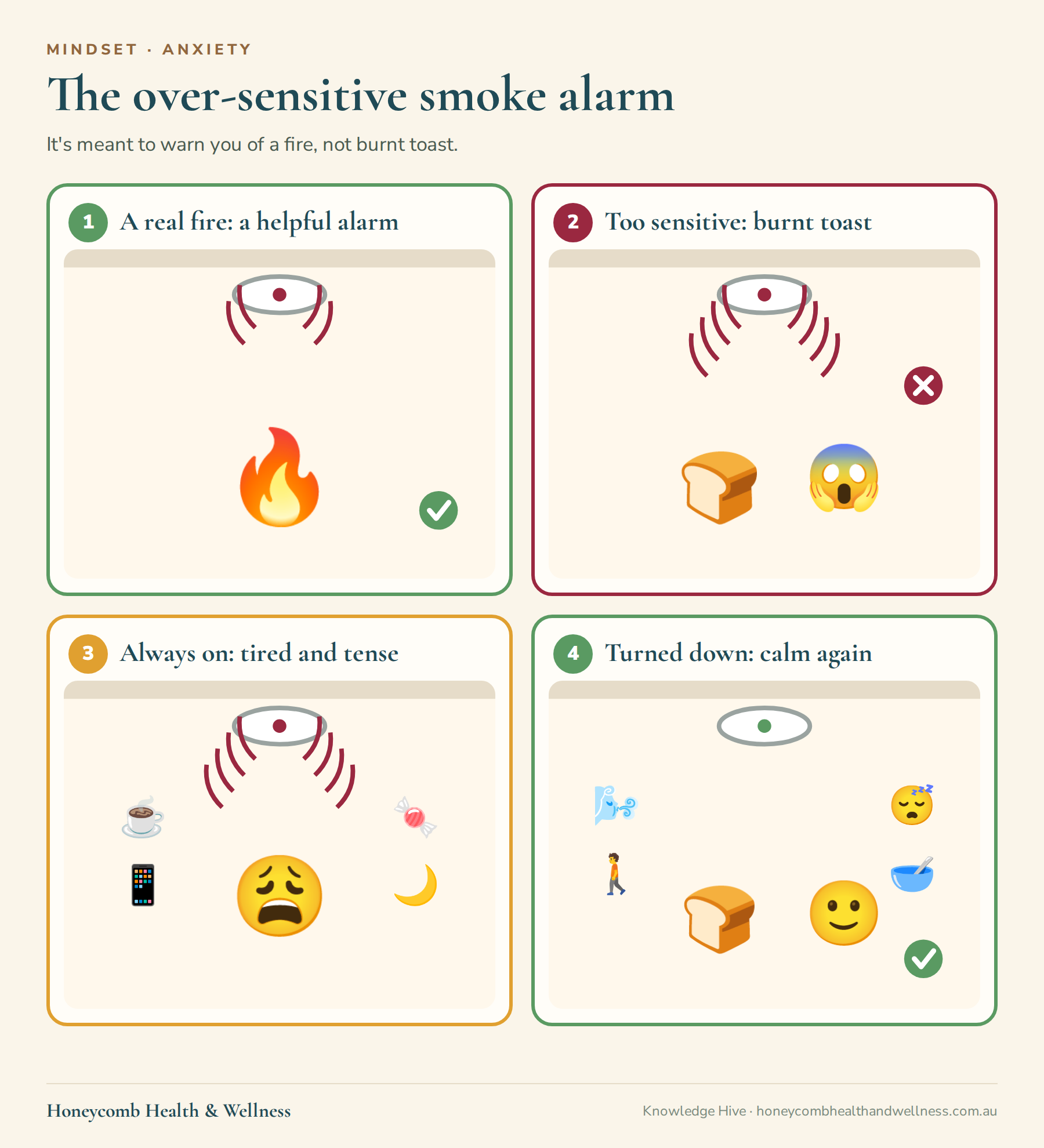
It’s kind of like this. A smoke alarm is meant to save your life in a fire. But if it’s set too sensitive, it screams every time you make toast. Before long you’re on edge every time you walk into the kitchen, and you’re exhausted from the noise.
Calming anxiety isn’t about ripping the alarm off the ceiling. It’s about gently turning the sensitivity back down, so it only goes off for real fires. It’s not exactly how it works scientifically, but it’s a picture many people find comforting.
Keep reading inside the Hive
The rest of this article is for Honeycomb members 🐝
Members read every Knowledge Hive article in full, plus 1,300+ recipes, the meal planner and the Six-Week Nutrition Reset.
Try 7 days freeAlready a member? Log in