

Heavy metals sound like something from a factory, not your kitchen. But small amounts of lead, mercury, cadmium and arsenic are part of everyday life, in soil, water, food and old houses. Because they can build up over many years, they’re worth understanding.
This article isn’t here to scare you. I want to show you where the main sources are, so you can make a few calm, sensible changes.
Why heavy metals matter
Unlike many toxins, heavy metals don’t break down. Your body has to bind them and carry them out, mostly through the bowel and the kidneys. If exposure is higher than your body can clear, they can be stored in tissues like bone, kidneys and the brain.
It’s a bit like glitter after a craft session with children. You can sweep up most of it, but if you keep bringing more glitter in, some ends up in the carpet for months. Our goal is to bring less glitter into the house and keep the broom busy. It’s not exactly like this scientifically, but it’s a picture most parents understand!
Mercury
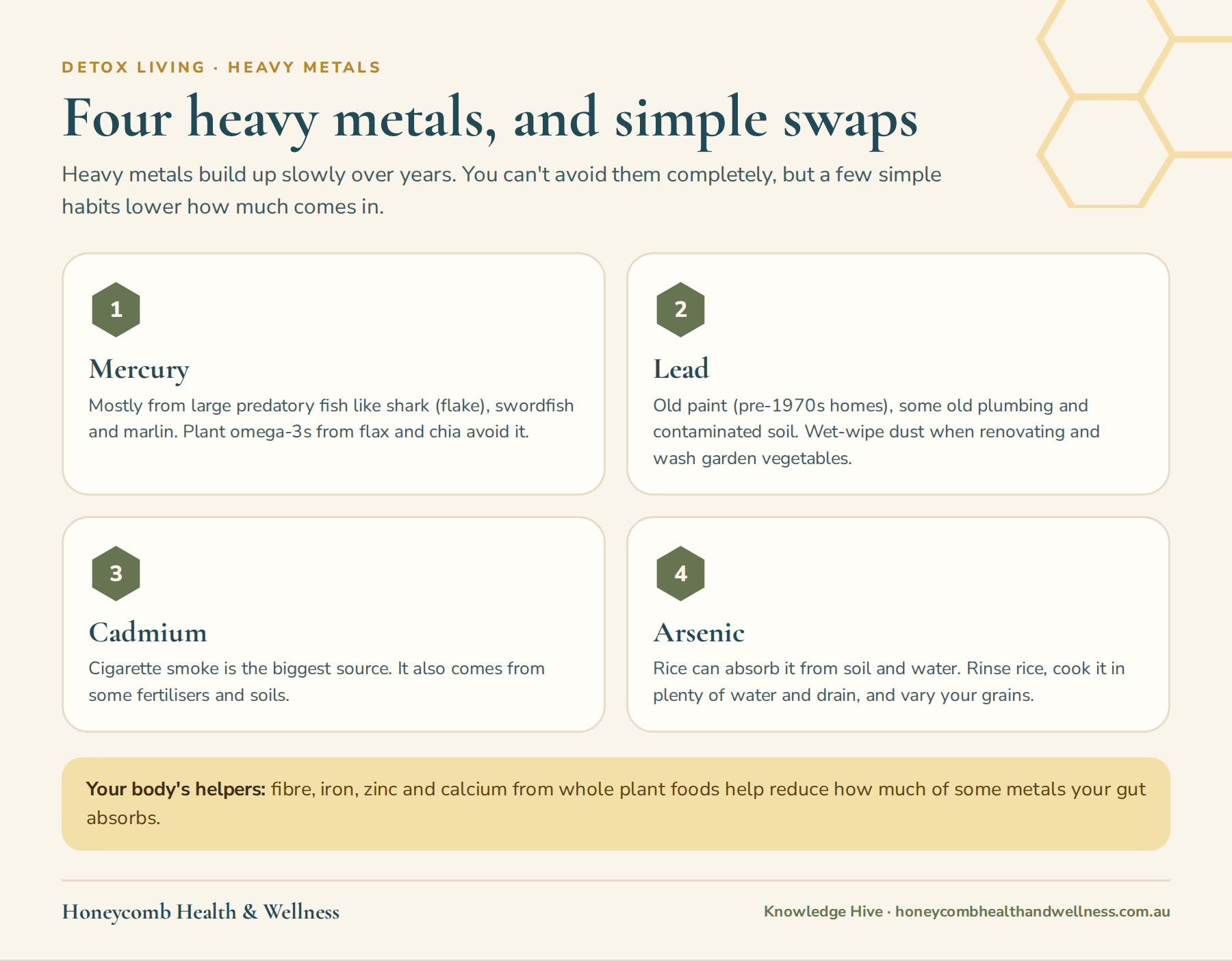
The main source of mercury for most people is fish, especially large predatory fish that eat smaller fish and accumulate it over a long life. Food Standards Australia New Zealand advises pregnant women and young children to limit shark (flake), billfish such as swordfish and marlin, and orange roughy.
At Honeycomb we get our omega-3s from ground flaxseed, chia seeds, walnuts and leafy greens instead, which sidesteps the mercury question altogether.
Lead
Lead was used in Australian house paint until the 1970s and in petrol until 2002. Today the biggest risks are old paint in older homes (especially during renovations), contaminated soil near old houses and busy roads, and some old plumbing fittings. Lead is especially harmful for children, which is why the World Health Organization says there is no known safe level.
- If your home was built before 1970, have paint tested before sanding or scraping.
- Wet-wipe and wet-mop rather than dry dusting, and use a HEPA vacuum.
- Wash homegrown vegetables well, and use raised beds with fresh soil in older suburbs.
- Run the cold tap for a minute first thing in the morning, before drinking or cooking with tap water.
Cadmium
Cigarette smoke is by far the biggest source of cadmium, and smokers have much higher levels than non-smokers. If you smoke, quitting is the single most powerful heavy-metal change you can make, and I’d love to support you through it.
Arsenic in rice
Rice plants absorb more arsenic from soil and water than most crops. That doesn’t mean rice is bad. Whole starches like rice are a foundation of the Honeycomb plate. It simply means it’s worth preparing it well. Research shows that cooking rice in plenty of water, like pasta, and draining it, lowers the arsenic content considerably (Raab et al., 2009).
- Rinse rice well before cooking.
- Cook it in five to six cups of water per cup of rice, then drain.
- Rotate your grains: oats, barley, quinoa, millet, buckwheat and potatoes all count.
How your body clears metals, and how food helps
- Fibre binds some metals in the gut and helps carry them out.
- Iron, zinc and calcium compete with lead and cadmium for absorption, so a diet rich in legumes, leafy greens, seeds and whole grains helps your gut absorb less.
- Sweating through exercise or a sauna releases small amounts of some metals in sweat (Genuis et al., 2011).
- Cruciferous vegetables and garlic support the liver’s binding and processing pathways.
A word on testing and chelation
If you’re worried about a specific exposure, through your job, a renovation or your water supply, testing can help. In clinic I can talk you through the options and interpret the results as part of your treatment plan. Please don’t try chelation products or kits from the internet. Chelation is a medical treatment for confirmed poisoning, and it can strip out essential minerals and cause harm.
Recipes that help
- Chocolate Blueberry Chia & Flax Pudding for plant omega-3s
- Chickpea & Edamame Millet Salad to mix up your grains
- Tofu Kimchi Stew for iron, calcium and zinc
Calm, informed choices beat worry every time.
A note on medication: please don’t stop or change any prescribed medication on your own. When you change the way you eat, your numbers can move quickly, so keep your prescribing doctor informed so your doses can be reviewed as you improve.
References
- Raab A et al. Cooking rice in a high water to rice ratio reduces inorganic arsenic content. Journal of Environmental Monitoring. 2009;11(1):41-44.
- Genuis SJ et al. Blood, urine, and sweat (BUS) study: monitoring and elimination of bioaccumulated toxic elements. Archives of Environmental Contamination and Toxicology. 2011;61(2):344-357.
- Food Standards Australia New Zealand. Mercury in fish: advice for pregnant women, women planning pregnancy and young children.
- World Health Organization. Lead poisoning fact sheet.
How Honeycomb can help
You don’t have to work this out alone
This information is general education and is not a substitute for individual advice. Please speak with your health practitioner before making changes, especially if you take prescribed medication.
Keep going
You’re not doing this alone
This information is general education and is not a substitute for individual advice. Please speak with your health practitioner before making changes, especially if you take prescribed medication.